Effective note-taking is a cornerstone of academic success and personal productivity. This comprehensive guide provides a structured approach to capturing information efficiently, whether from lectures, meetings, or personal study. We’ll delve into various note-taking styles, explore preparation strategies, and uncover techniques for active listening and note organization. From traditional methods to cutting-edge digital tools, this guide empowers you to master the art of note-taking and unlock its potential for learning and achievement.
This guide covers a wide spectrum of strategies, from understanding different note-taking styles to mastering digital tools and techniques. It also addresses challenges like overcoming distractions and managing stress, providing practical tips and solutions. By the end of this exploration, you will possess a robust toolkit to enhance your note-taking skills and unlock your full potential for knowledge acquisition.
Understanding Note-Taking Styles
Effective note-taking goes beyond simply recording information; it involves tailoring your approach to your learning style and the subject matter. Recognizing different note-taking methods and understanding their strengths and weaknesses is crucial for optimizing your learning process. Choosing the right method can significantly enhance comprehension and retention.
Comparison of Note-Taking Methods
Different note-taking methods cater to various learning preferences and subject demands. A suitable method can transform passive listening into active engagement with the material. Linear note-taking, Cornell notes, and mind mapping are common approaches with distinct characteristics.
- Linear Note-Taking: This method involves recording information in a sequential, paragraph-like format. It’s a straightforward approach, often used for lectures or readings. The structure follows the flow of the speaker or text. Its simplicity makes it accessible to many students. However, it can sometimes be less effective for complex ideas requiring visual or spatial organization.
- Cornell Notes: This method employs a structured two-column format. The left column is for cues and questions, and the right column for notes. This structure facilitates active recall and summarization. The use of cues promotes critical thinking and understanding. It is particularly useful for subjects with defined sections or topics.
- Mind Mapping: This method employs a visual representation of ideas, branching out from a central theme. It’s ideal for capturing connections between concepts and exploring complex topics. Mind maps are highly visual and aid in understanding the relationships between ideas. Their visual nature can be less practical for subjects requiring detailed linear explanations.
Advantages and Disadvantages of Each Method
The effectiveness of each method depends on the subject matter and individual learning style.
- Linear Note-Taking: Advantages include its simplicity and ease of use. It’s suitable for straightforward presentations or readings. Disadvantages include its limited ability to capture complex relationships between ideas and its potential for passive note-taking. It may not be optimal for subjects like history or science, which often require interconnecting concepts.
- Cornell Notes: Advantages include its structure for active recall, aiding in understanding and retention. It is particularly beneficial for lectures or readings requiring structured note-taking. Disadvantages might be the need for consistent application to see its full benefits and the potential for over-reliance on the structure for less visually-oriented learners.
- Mind Mapping: Advantages include its ability to visually represent connections between ideas, promoting understanding of complex concepts. It’s suitable for brainstorming, problem-solving, or exploring complex subjects like philosophy or literature. Disadvantages include its potential to become overly complex if not organized carefully and its less practicality for detailed factual content.
Note-Taking Style Selection
Choosing the best note-taking style depends on individual preferences and learning style. Consider your strengths and weaknesses as a learner.
| Note-Taking Style | Visual | Auditory | Kinesthetic |
|---|---|---|---|
| Linear | Low | Medium | Low |
| Cornell | Medium | Medium | Medium |
| Mind Mapping | High | Medium | Low |
A student who is visually oriented might find mind mapping more effective. An auditory learner might find linear note-taking useful. Understanding these differences allows you to choose the method that best suits your individual needs.
Preparing for Effective Note-Taking
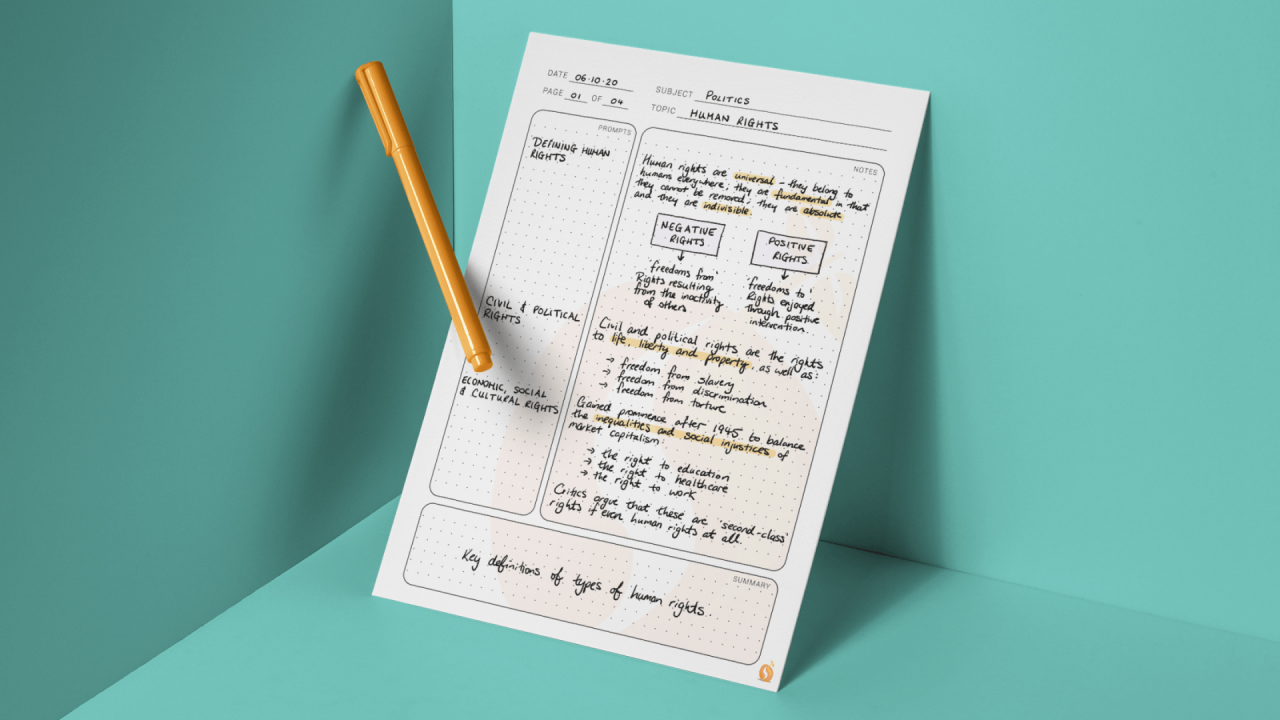
Effective note-taking is not merely about recording information; it’s about strategically preparing to capture and process it efficiently. Proper preparation sets the stage for accurate and organized notes, facilitating future review and understanding. This involves more than just having a notebook; it encompasses thoughtful planning and the selection of appropriate tools.Effective note-taking relies on careful preparation. A well-structured notebook or digital document allows for easy navigation and retrieval of information, enabling deeper learning and application of concepts.
Choosing the right materials and developing an organizational system are crucial steps in this preparation.
Essential Materials for Note-Taking
Having the right tools significantly impacts note-taking effectiveness. A variety of materials can enhance your note-taking experience. These range from traditional tools like pens and highlighters to digital tools such as laptops, tablets, or specialized note-taking apps.
- Pens and Highlighters: Selecting pens with varying colors and styles can aid in organizing and emphasizing key concepts. Highlighters help draw attention to important information, aiding in its recall.
- Notebooks: Choose notebooks with appropriate paper quality and spacing, ensuring clarity and legibility. Consider using different notebooks for different subjects or topics for better organization.
- Digital Tools: Digital tools such as laptops, tablets, or specialized note-taking apps provide flexibility and options for formatting, structuring, and searching your notes. Features like voice recording and image integration can be useful for capturing diverse information.
Organizing Your Notes
A well-organized system for your notes is key to their usefulness. The organization scheme should support easy retrieval of information, making future study sessions more efficient. A structured approach will enhance your ability to find specific details when needed.
- Digital Documents: Utilize folders, tags, and s to create a logical structure within your digital document. Employing a consistent file naming convention and categorizing notes will enhance searchability.
- Physical Notebooks: Employ a system of headings, subheadings, and dividers within your notebook. Color-coding or using different sections for different topics can improve readability and organization.
- Note-Taking System: Develop a personal system for note-taking that suits your learning style and needs. Consider using abbreviations, symbols, or visual aids to streamline the note-taking process.
Pre-Note-Taking Activities
Taking the time to prepare before a lecture or reading session is crucial. These activities establish a framework for efficient note-taking, leading to a more productive and insightful learning experience.
- Reviewing Previous Notes: Refresh your memory on prior learning by reviewing related notes. This helps in understanding new concepts within the context of existing knowledge.
- Setting Learning Goals: Identify the specific learning objectives for the lecture or reading session. This helps to focus note-taking efforts on relevant material.
- Preparing Questions: Formulate questions about the subject matter. This encourages active engagement and helps to identify areas needing clarification during the note-taking process.
Active Note-Taking Strategies
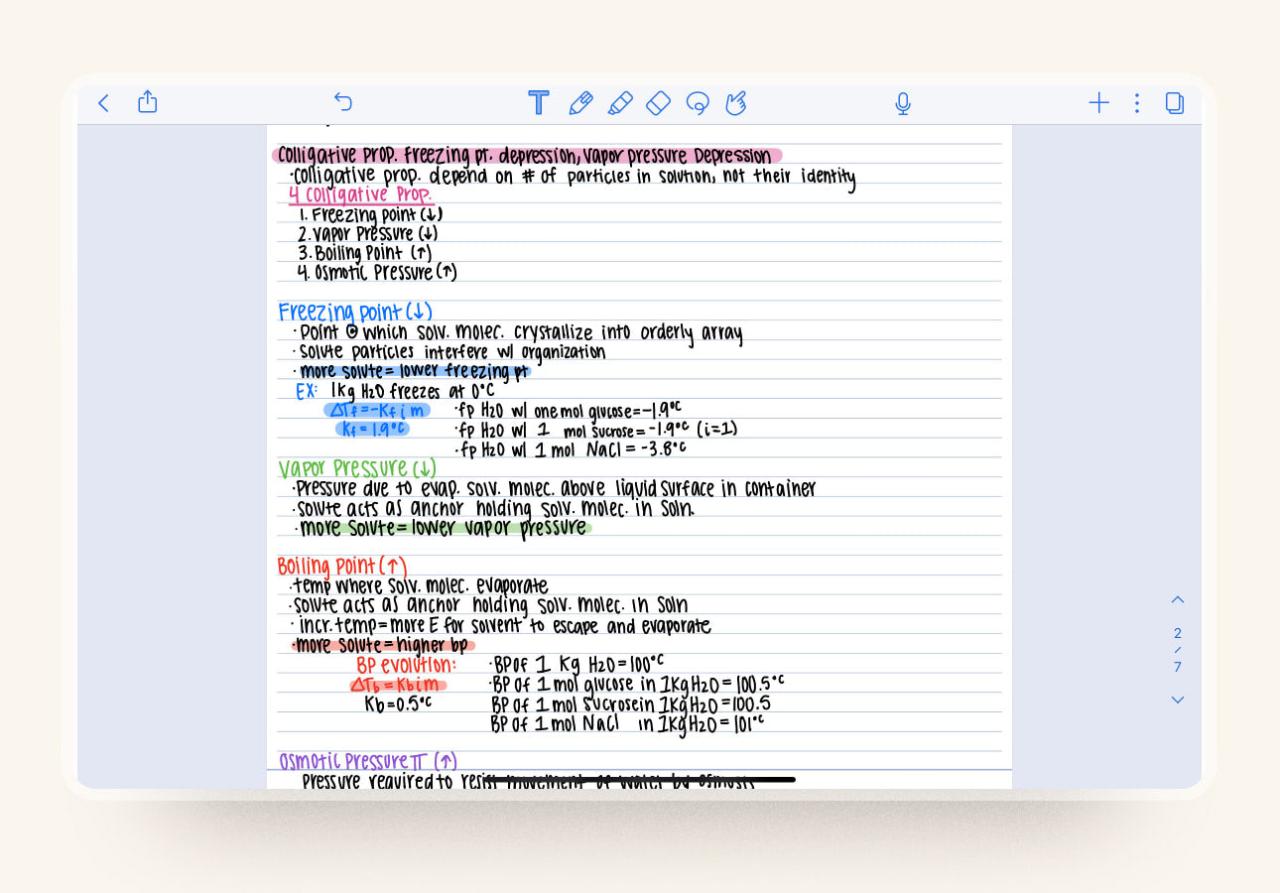
Effective note-taking transcends passive recording; it involves actively engaging with the material. This active engagement enhances comprehension and retention, transforming notes from mere transcriptions into valuable learning tools. By employing various strategies, students can transform lectures, readings, and discussions into readily accessible and insightful resources.Active note-taking goes beyond simply writing down words. It involves a conscious effort to process information, connect concepts, and create personalized representations of the material.
This proactive approach translates to more effective learning and better performance in various academic settings.
Active Listening Techniques
Active listening is crucial for successful note-taking. It involves focusing intently on the speaker, processing the information, and mentally organizing it. Students should strive to understand the speaker’s main points, supporting details, and underlying message. This active engagement promotes a deeper understanding of the subject matter. Techniques include maintaining eye contact (when appropriate), asking clarifying questions, and summarizing the speaker’s points in your mind as they speak.
Summarizing and Paraphrasing
Summarizing and paraphrasing are valuable note-taking skills. Summarizing condenses large amounts of information into concise points, capturing the core message without unnecessary details. Paraphrasing rephrases information in your own words, ensuring a deeper understanding of the concepts. Both techniques are essential for transforming complex information into manageable and memorable formats. For example, instead of writing down a lengthy definition, students can summarize the key aspects of a term.
Creating Visual Aids
Visual aids are powerful tools for organizing and remembering information. Diagrams, charts, and mind maps can visually represent complex relationships, concepts, and processes. These visual representations provide a concrete way to connect abstract ideas and enhance understanding. For instance, a flow chart can illustrate the steps in a scientific process or the progression of an argument in a philosophical debate.
A mind map can help students connect related ideas and concepts by visually representing their connections.
Using Abbreviations and Symbols
Abbreviations and symbols can streamline note-taking, allowing students to capture information quickly and efficiently without sacrificing clarity. However, it’s crucial to develop a consistent system of abbreviations and symbols to avoid ambiguity. A well-defined system ensures that abbreviations and symbols used in notes are easily understood and don’t create confusion later on. For example, using “≠” to denote “not equal to” or “↑” for “increase” can significantly speed up the note-taking process while maintaining clarity.
A table showcasing common abbreviations and their corresponding symbols can be a useful resource for consistency.
| Abbreviation | Symbol | Meaning |
|---|---|---|
| Not Equal | ≠ | Not equal to |
| Increase | ↑ | Increase in value |
| Decrease | ↓ | Decrease in value |
| Example | → | Illustrative example |
Note-Taking During Lectures and Meetings

Effective note-taking is crucial for absorbing information during lectures and meetings. Beyond simply transcribing everything, a strategic approach allows for deeper comprehension and retention of key concepts. This section details specific strategies for maximizing note-taking efficiency in these settings.Careful note-taking transforms passive listening into active learning, improving retention and comprehension of both verbal and nonverbal communication. This approach is essential in any professional environment, from academic settings to boardroom discussions.
Effective Note-Taking Strategies for Lectures
A well-structured approach to note-taking during lectures enhances understanding and recall. Taking notes isn’t about writing everything down verbatim; instead, it’s about capturing the core ideas.
- Utilizing Abbreviated Language and Symbols: Employing shorthand, symbols, and abbreviations significantly accelerates the note-taking process. This technique allows for faster recording of information while retaining its essence. For example, instead of writing “important,” use an asterisk (*), and for “increase,” use an upward-pointing arrow (↑). This is particularly helpful when capturing complex concepts or technical terms.
- Focusing on Key Concepts and Main Points: Identify the main points and supporting details presented by the lecturer. Focus on capturing the core ideas rather than every single word. Use Artikels, mind maps, or other visual aids to organize information effectively.
- Recording Visual Aids and Demonstrations: If the lecturer uses visuals like graphs, charts, or diagrams, sketch simple representations in your notes. This reinforces visual learning and aids in understanding complex information.
Strategies for Capturing Key Ideas During Meetings
Effective note-taking during meetings is crucial for accurately documenting discussions and decisions.
- Identifying Key Participants and Their Roles: Clearly note the individuals involved and their respective roles in the meeting. This helps in understanding the context of each discussion point.
- Summarizing Key Discussion Points: Capture the core points raised by each participant. This is essential for reconstructing the meeting’s content later.
- Recording Action Items and Responsibilities: Specifically note who is responsible for completing each action item, along with the deadline. This ensures accountability and facilitates follow-up.
Recording Important Dates, Times, and Locations
Accurate recording of dates, times, and locations is critical for referencing and follow-up.
- Using a Consistent Format: Establish a standardized format for recording dates, times, and locations. For example, always use the format “MM/DD/YYYY” for dates.
- Utilizing a Dedicated Section in Your Notes: Create a designated section for recording important dates, times, and locations to ensure they are easily accessible.
- Employing Calendars and Planners: Use digital or physical calendars and planners to schedule and record important dates, times, and locations, in conjunction with your notes.
Recording Speaker’s Nonverbal Cues and Important Details
Understanding nonverbal cues can significantly enhance the understanding of a meeting or lecture.
- Noting Speaker’s Body Language: Observe and record the speaker’s posture, gestures, and facial expressions. These nonverbal cues often reveal the speaker’s emotional state and emphasis on certain points.
- Capturing Important Details and Examples: Note down specific examples, anecdotes, and other details shared during the meeting or lecture. These provide context and reinforce the understanding of concepts.
Organizing and Reviewing Notes
Effective note-taking is not just about capturing information; it’s about transforming that information into a usable resource. Proper organization and review are crucial for maximizing the value of your notes, enabling efficient learning and recall. This section details strategies for organizing your notes in a structured manner, reviewing them effectively, and converting them into useful study guides.Thorough note organization and review transform raw data into usable knowledge.
These processes allow for quick access to information, facilitating deeper understanding and improved retention. The methods described below will help you to manage your notes effectively, optimizing your learning experience and exam preparation.
Methods for Organizing Notes
Note organization is a crucial step in maximizing the effectiveness of your notes. Different methods suit various learning styles and subjects. The choice of organization method depends on the specific content and your personal preference.
| Organization Method | Description | Example |
|---|---|---|
| Chronological | Arranging notes in the order they were presented, such as a lecture or meeting. | Recording meeting minutes in the order they occurred, or arranging lecture notes by the date of the class. |
| Thematic | Grouping notes by topic or concept. | Organizing notes on different aspects of marketing, such as pricing strategies, segmentation, and promotion. |
| Problem-Solution | Organizing notes around problems and their solutions. | Note-taking in a course on engineering design where you might group notes by the problem being addressed and the solutions explored. |
| Mind Mapping | Creating a visual representation of ideas and their connections. | Visualizing a complex topic by connecting key concepts with branches and sub-branches. |
Reviewing and Summarizing Notes
Regular review is essential for reinforcing learning and retaining information. This section provides effective strategies for reviewing and summarizing your notes.Reviewing your notes immediately after a session helps solidify your understanding. This is a critical step for successful note-taking and learning. Active recall, where you try to reproduce the information from memory, enhances retention. A concise summary of the main points is highly beneficial.
- Active Recall: Test yourself by covering portions of your notes and trying to reproduce the information. This technique strengthens memory traces.
- Spaced Repetition: Review your notes at increasing intervals. This method strengthens memory retention and recall over time.
- Summary Creation: After each session, create a concise summary of the main points. This condensation ensures you focus on the core ideas.
- Highlighting and Annotations: Highlight key terms, concepts, and formulas. Annotate your notes with clarifying comments or questions. This active engagement aids comprehension.
Creating Concise Study Guides
Transforming your notes into a study guide allows for focused review and efficient exam preparation. This section demonstrates how to create concise and effective study guides from your notes.Converting notes into a study guide involves distilling the core information into a manageable format. This step significantly enhances the value of your notes for exam preparation. Conciseness is crucial; a study guide should highlight key concepts and formulas, avoiding unnecessary detail.
- Key Concepts: Identify the fundamental concepts and principles discussed in your notes. These should be the cornerstone of your study guide.
- Key Formulas and Equations: Include any critical formulas or equations in a dedicated section, along with clear examples and explanations.
- Important Terms: List key terms and definitions, highlighting their significance in the context of the subject matter. Use a consistent format for definitions.
- Example Problems: If applicable, include example problems to demonstrate the application of concepts and formulas. This hands-on approach improves understanding.
Using Notes for Future Reference and Exam Preparation
Effective note-taking allows for future reference and efficient exam preparation. This section discusses ways to use your notes beyond the initial learning session.Maintaining well-organized notes provides a valuable resource for future reference. This approach allows for easy retrieval of information when needed, fostering long-term learning and retention. Consistent review and revision further enhance the utility of these notes.
- Index and Categorize: Establish a system for indexing and categorizing your notes. This enhances searchability and quick access to specific topics.
- Cross-Referencing: Cross-reference related notes to build connections between different topics. This approach strengthens understanding and recall.
- Use for Future Courses: Well-organized notes can be valuable resources for future courses that build upon previously learned concepts.
- Regular Review: Schedule regular review sessions to reinforce your understanding and enhance retention of information. This regular revision will significantly aid in future reference.
Digital Note-Taking Tools and Techniques
Digital note-taking tools have revolutionized the way we capture and manage information. These platforms offer a variety of features beyond traditional pen-and-paper methods, enabling more efficient organization, searchability, and collaboration. Leveraging these tools effectively can significantly enhance your note-taking experience and improve learning outcomes.Utilizing digital note-taking tools can improve the efficiency and organization of your notes. These tools often allow for real-time editing, formatting, and integration with other applications, making them highly versatile.
This versatility can lead to better note review and retention.
Different Digital Note-Taking Apps and Software
A wide array of digital note-taking applications and software cater to diverse needs and preferences. Popular choices include Evernote, OneNote, Google Keep, Notion, Bear, and others. Each platform boasts unique strengths, from robust organizational features to collaborative functionalities. Understanding the strengths of each application is crucial for selecting the most suitable tool.
Utilizing Features of Digital Note-Taking Tools Effectively
Digital note-taking tools offer a multitude of features that can streamline the note-taking process. These tools often provide robust search capabilities, enabling quick retrieval of specific information. Features like tagging, highlighting, and linking facilitate efficient organization and retrieval of information. Integrating these tools with other productivity apps, such as calendars or project management software, can further enhance their utility.
- Search and Retrieval: Many digital note-taking tools provide advanced search functionality, enabling you to quickly locate specific information within your notes. This can be particularly useful when reviewing large volumes of material. For instance, searching for s or specific dates can instantly pinpoint relevant sections.
- Organization and Formatting: Digital tools allow for flexible formatting options, such as different font styles, headings, bullet points, and tables. This enhances readability and allows for a more structured presentation of information. Using headings and subheadings can create a hierarchical structure, mirroring the logical flow of the material being noted.
- Collaboration and Sharing: Some tools permit collaboration with others, enabling real-time editing and feedback. Sharing features facilitate collaboration with study groups or project partners. For example, shared documents can allow multiple users to access, contribute to, and edit notes simultaneously.
Comparison of Digital Note-Taking Tools
A comparative analysis of popular digital note-taking tools highlights their respective strengths and weaknesses. The following table provides a concise overview, aiding in the selection of the most suitable tool.
| Tool | Pros | Cons |
|---|---|---|
| Evernote | Robust organization features, extensive integrations, powerful search | Can be complex for beginners, some features require a paid subscription |
| OneNote | Excellent for creating structured notes, good integration with Microsoft products | May feel less flexible than other options, interface can be overwhelming for some |
| Google Keep | Simple and user-friendly interface, excellent for quick notes, free and accessible | Limited formatting options, less robust organizational features |
| Notion | Highly customizable and versatile, flexible workspace for various tasks | Steeper learning curve compared to simpler tools, potential for overwhelming features |
Strategies for Backing Up and Sharing Digital Notes
Backing up and sharing digital notes is crucial for preventing data loss and facilitating collaboration. Regular backups to external hard drives or cloud services are recommended. Sharing notes can be achieved through various methods, such as email, cloud storage, or dedicated note-sharing platforms.
- Backup Strategies: Regularly backing up digital notes is essential to protect against data loss. This can be achieved through cloud storage services, external hard drives, or a combination of both. Utilizing cloud storage can offer automatic backups, while external hard drives provide a physical copy of your notes. Consider creating periodic backups to different locations to ensure redundancy.
- Sharing Strategies: Sharing digital notes can be achieved through various methods, depending on the needs of the user. Using email can be useful for sending notes to specific individuals. Cloud storage services allow for shared access, enabling collaboration. Specialized note-sharing platforms often provide additional features like commenting and feedback mechanisms.
Note-Taking for Different Subject Types

Effective note-taking transcends generic strategies; it requires adaptation to the unique characteristics of various subjects. Understanding the distinct nature of information presented in science, humanities, or mathematics allows for more targeted and efficient note-taking. This adaptability ensures that the notes remain pertinent and useful for comprehension and future review.Different subject areas require tailored approaches to capture and process information effectively.
This necessitates adjusting note-taking strategies to align with the specific format and structure of the subject matter. Whether from textbooks, articles, or presentations, recognizing the unique characteristics of each source facilitates a more focused and effective note-taking process.
Note-Taking Strategies for Science Subjects
Science subjects often involve complex concepts, technical terms, and factual information. To effectively capture this information, focus on key terms, definitions, and formulas. Visual aids such as diagrams and charts are also crucial. Employing a combination of linear and nonlinear note-taking styles can prove beneficial.
- Highlighting key terms and definitions: Carefully identify and highlight key scientific terms and definitions. Use different colors or symbols to distinguish different categories of information. This visual differentiation aids in recall and comprehension.
- Sketching diagrams and charts: Visual representations, such as diagrams and charts, are highly effective in science. Sketching these aids in understanding complex processes or relationships, aiding in visual memory and recall.
- Recording formulas and equations: Accurate transcription of formulas and equations is paramount. Ensure clear and concise notation, including proper use of symbols and subscripts.
- Creating concept maps or mind maps: Connecting related concepts through visual representations facilitates understanding the interconnectedness of scientific principles. These aids can be especially helpful for complex topics.
Note-Taking Strategies for Humanities Subjects
Humanities subjects, such as history, literature, and philosophy, emphasize analysis, interpretation, and understanding of ideas. Focus on capturing key arguments, supporting evidence, and personal reflections. Note-taking in these subjects often involves paraphrasing and summarizing.
- Summarizing key arguments: Summarizing the core arguments of an author or speaker is a crucial element of effective note-taking. This helps in capturing the essence of the discussion or presentation.
- Identifying supporting evidence: Highlighting the supporting evidence that backs up the author’s or speaker’s arguments is essential for comprehension. This includes examples, quotations, and references.
- Recording personal reflections: Note-taking in humanities subjects often includes personal reflections and interpretations of the presented material. These personal insights can enhance comprehension and critical thinking.
- Using quotes and paraphrases: Employing quotes effectively or paraphrasing key concepts allows for direct representation of ideas and a clear understanding of their context.
Note-Taking Strategies for Mathematics Subjects
Mathematics demands precise notation and clear articulation of steps and reasoning. Focus on accurately recording formulas, theorems, and problem-solving strategies. Use symbolic language to represent mathematical concepts.
- Writing down formulas and theorems: Ensure accurate and concise transcription of mathematical formulas and theorems. Highlight key components and use appropriate notation.
- Creating diagrams and graphs: Visual representations are beneficial for understanding mathematical concepts. Sketching diagrams or graphs aids in visualization and comprehension of complex relationships.
- Recording problem-solving steps: Clearly document each step in problem-solving, highlighting the logic and reasoning employed. This facilitates a deeper understanding of the problem-solving process.
- Using symbolic notation: Employ mathematical symbols and notations to effectively communicate mathematical ideas and concepts.
Overcoming Challenges in Note-Taking
Effective note-taking is a crucial skill for academic and professional success. However, several obstacles can hinder our ability to capture and retain information effectively. Understanding these challenges and employing strategies to overcome them is essential for maximizing learning and productivity. This section explores common roadblocks and practical techniques to enhance note-taking performance.Effective note-taking is often hampered by distractions and lack of focus.
External factors such as noisy environments, social media notifications, or interruptions can significantly impact our ability to concentrate and record information accurately. Internal factors, such as stress, anxiety, or a lack of motivation, can also negatively influence note-taking effectiveness.
Identifying Common Obstacles
Several common obstacles hinder effective note-taking. These include distractions from external sources, lack of focus and concentration, stress and anxiety related to the task, and difficulties in managing time effectively. Understanding these obstacles is the first step toward developing strategies to overcome them.
Overcoming Distractions
Distractions are a significant hurdle in effective note-taking. To mitigate these distractions, create a dedicated and quiet workspace free from interruptions. Use noise-canceling headphones or earplugs to block out distracting sounds. Turn off notifications on your phone and computer, or put them in a different room. Employ time management techniques such as the Pomodoro Technique to maintain focus for specific periods.
Improving Focus and Concentration
Maintaining focus and concentration during note-taking sessions is crucial. Regular breaks can help maintain focus. Short breaks every 25-50 minutes can refresh your mind and prevent mental fatigue. Mindfulness exercises or brief stretches can also enhance concentration. Creating a structured and organized note-taking system can also contribute to a focused approach.
Managing Stress and Anxiety
Stress and anxiety can significantly impact note-taking performance. Techniques such as deep breathing exercises, progressive muscle relaxation, and meditation can help manage stress and anxiety. Prioritizing tasks, setting realistic goals, and breaking down large tasks into smaller, manageable steps can reduce the feeling of being overwhelmed. Seeking support from peers, teachers, or counselors can provide additional emotional support and coping strategies.
Closure
In conclusion, mastering effective note-taking is a multifaceted skill encompassing various techniques and tools. From choosing the right style to organizing and reviewing notes, this guide provides a comprehensive framework for successful note-taking. Ultimately, this refined approach to capturing and organizing information will empower you to learn more effectively and efficiently, regardless of the subject matter or learning style.
We hope this guide serves as a valuable resource for your continued academic and personal development.