Effective task prioritization is crucial for achieving goals and managing time efficiently. This guide provides a comprehensive overview of various methods and techniques, from understanding the core principles to utilizing practical tools and strategies for success. By mastering the art of prioritization, individuals and teams can navigate complex workloads and achieve desired outcomes.
The process involves understanding the underlying principles of task prioritization, identifying crucial tasks, selecting suitable techniques, leveraging helpful tools, and overcoming potential challenges. This detailed exploration will equip you with the knowledge and resources to effectively manage your tasks and reach your objectives.
Understanding Task Prioritization
Task prioritization is a critical skill for anyone aiming to achieve their goals effectively. It involves systematically evaluating tasks based on their urgency, importance, and potential impact, then arranging them in a sequence that maximizes productivity and efficiency. A well-defined prioritization strategy allows individuals to focus on the most crucial tasks first, preventing overwhelm and ensuring progress toward desired outcomes.Prioritizing tasks is essential for achieving goals, as it helps manage time and resources effectively.
By focusing on the most important and urgent tasks, individuals can maximize their output and reduce the likelihood of feeling overwhelmed or stressed. This structured approach fosters a sense of accomplishment and contributes significantly to overall success in personal and professional endeavors.
Definition of Task Prioritization
Task prioritization is the process of determining the order in which tasks should be completed based on their urgency, importance, and impact. This involves evaluating each task against predefined criteria to identify which ones demand immediate attention and which can be deferred. Effective prioritization ensures that time and resources are allocated to the most crucial activities first, thereby increasing the likelihood of achieving desired outcomes.
Importance of Prioritizing Tasks
Prioritizing tasks is crucial for achieving goals because it helps to manage time and resources efficiently. By focusing on the most important and urgent tasks, individuals can maximize their productivity and reduce the likelihood of feeling overwhelmed. This structured approach fosters a sense of accomplishment and contributes to overall success. Without prioritization, individuals may find themselves juggling numerous tasks simultaneously, leading to decreased productivity and increased stress.
Common Reasons for Struggling with Prioritization
Individuals often struggle with prioritizing tasks due to various factors. These include a lack of clear goals and objectives, difficulty in distinguishing between urgent and important tasks, and an inability to effectively manage time and distractions. Furthermore, a tendency to procrastinate, poor time management skills, and an overwhelming workload can significantly hinder the ability to prioritize tasks effectively.
Unrealistic expectations, a lack of prioritization tools, and a failure to delegate tasks can also contribute to this struggle.
Different Approaches to Task Prioritization
Several approaches exist for prioritizing tasks, each with its own strengths and weaknesses. Understanding these different methods can help individuals select the approach that best suits their needs and working style. These methods often involve evaluating tasks based on criteria such as urgency, importance, deadlines, and impact on overall goals. Experimenting with different approaches is key to finding what works best for each individual.
Comparison of Prioritization Methods
| Method | Description | Pros | Cons |
|---|---|---|---|
| Eisenhower Matrix | Categorizes tasks based on urgency and importance (urgent/important, important/not urgent, urgent/not important, not urgent/not important). | Provides a clear framework for organizing tasks. Easy to understand and apply. | Can be simplistic; may not fully capture the complexity of some tasks. Requires discipline to consistently apply the matrix. |
| MoSCoW Method | Prioritizes tasks based on their impact and importance, ranking them as Must have, Should have, Could have, Won’t have. | Helps identify critical tasks and prioritize accordingly. Useful for projects with multiple stakeholders. | May not be suitable for situations with limited time or resources. Can be complex to implement for large projects. |
| Pareto Principle (80/20 Rule) | Focuses on identifying the 20% of tasks that yield 80% of the results. | Helps identify high-impact tasks. Encourages concentration on the most crucial elements. | May lead to neglecting less impactful tasks. Requires careful analysis to accurately apply the principle. |
| Deadline-Based Prioritization | Organizes tasks based on their deadlines. | Simple and effective for tasks with fixed deadlines. | Can lead to a focus on immediate deadlines at the expense of long-term goals. May lead to missed deadlines if not properly managed. |
Identifying and Categorizing Tasks
Effective task prioritization hinges on accurately identifying and categorizing tasks. This process involves understanding the inherent importance and urgency of each task to create a strategic approach for managing workload and achieving goals efficiently. By recognizing the crucial elements of a task, you can allocate resources and time in a way that maximizes productivity and minimizes stress.
Methods for Identifying Important Tasks
Several methods can help you identify tasks that hold significant importance. Analyzing the impact of each task on your overall goals and objectives is a critical first step. Consider the potential benefits and consequences of completing or delaying each task. A thorough understanding of project requirements and deadlines is also essential. Understanding the relationships between tasks and their potential dependencies will help you identify tasks that are critical for the overall success of the project.
Strategies for Categorizing Tasks Based on Urgency and Importance
Categorizing tasks based on their urgency and importance is a crucial aspect of prioritization. This method, often visualized using a matrix, allows you to categorize tasks into four quadrants, helping you focus on the most critical tasks first. Understanding the urgency and importance of a task helps you determine the appropriate response and allocation of resources.
Task Categorization Models
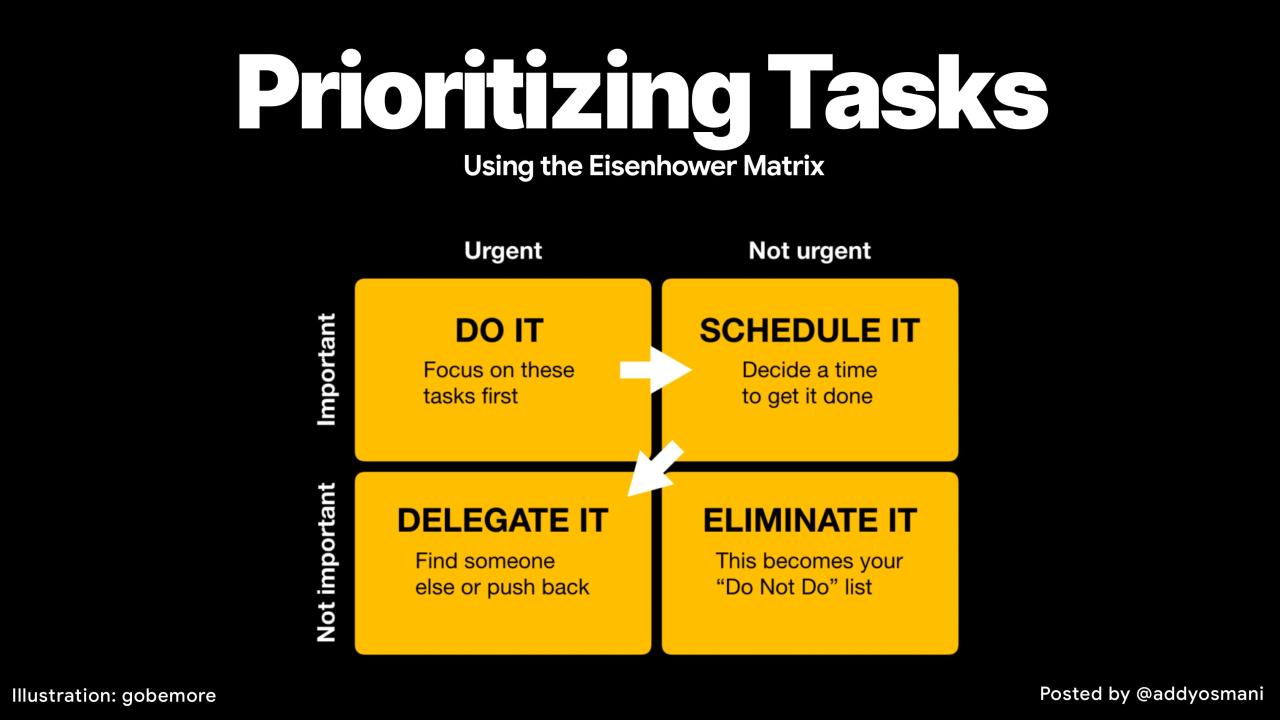
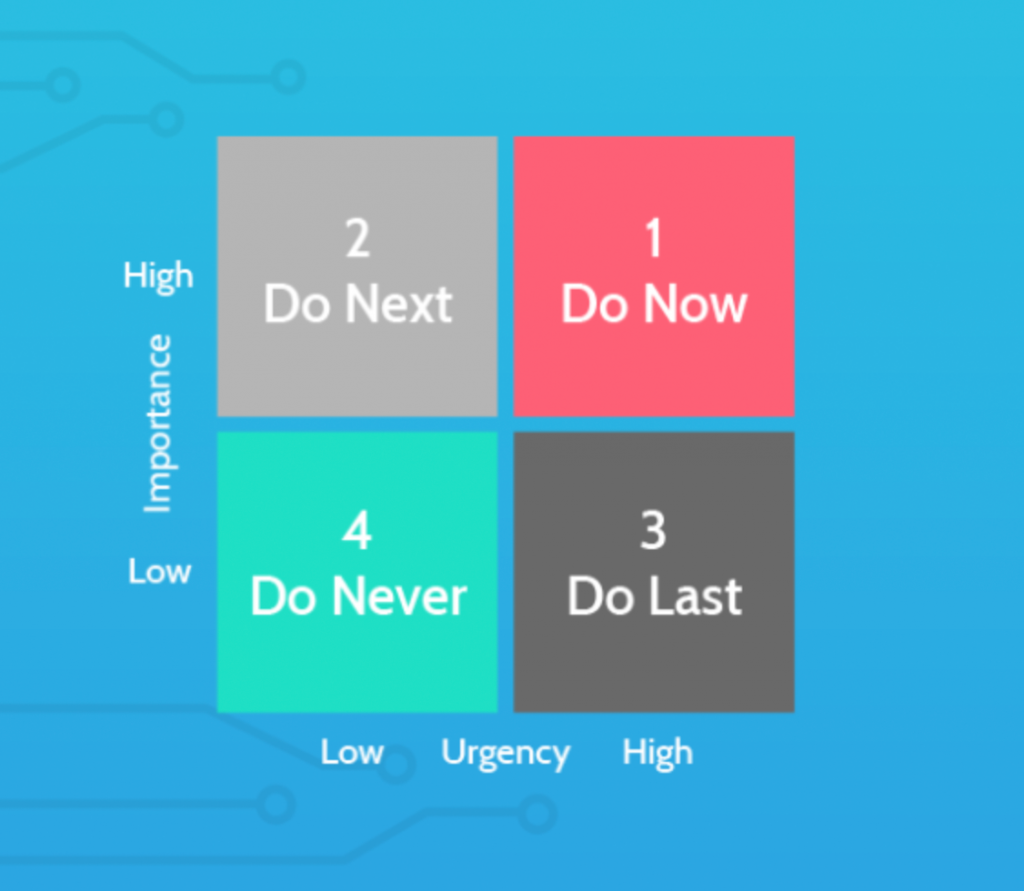
The Eisenhower Matrix, a widely used method, categorizes tasks into four quadrants based on their urgency and importance. This method helps you differentiate between tasks that are both urgent and important, urgent but not important, important but not urgent, and neither urgent nor important. This approach helps in efficiently allocating time and energy to the most impactful tasks.
| Category | Description | Examples |
|---|---|---|
| Urgent and Important | Tasks requiring immediate attention and have significant impact on goals. | Meeting deadlines, resolving crises, handling critical issues. |
| Urgent but Not Important | Tasks demanding immediate action but don’t significantly contribute to long-term goals. | Interruptions, some phone calls, pressing emails. |
| Important but Not Urgent | Tasks contributing to long-term goals, but don’t require immediate action. | Planning, relationship building, strategizing, preventative maintenance. |
| Not Urgent and Not Important | Tasks that don’t contribute to your goals and don’t require immediate attention. | Distractions, time wasters, unnecessary activities. |
Applying Methods to Real-World Scenarios
Imagine you are a project manager for a software development team. A critical bug report requiring immediate attention falls into the “Urgent and Important” category. Conversely, planning for future releases and conducting team training sessions are “Important but Not Urgent” tasks. By correctly categorizing these tasks, you can efficiently allocate resources to the bug report while scheduling time for planning and training.
This approach ensures that the most crucial tasks are addressed first, maximizing project efficiency and minimizing potential delays. Another example is managing personal tasks. A doctor’s appointment is “Urgent and Important,” while planning your next vacation falls into “Important but Not Urgent.” This allows you to organize your schedule effectively, ensuring that important tasks are not overlooked due to daily pressures.
Prioritization Techniques
Effective task prioritization is crucial for productivity and achieving goals. Understanding which tasks demand immediate attention and which can be scheduled for later allows for focused effort and optimized resource allocation. By employing various prioritization techniques, individuals and teams can ensure that critical tasks are addressed efficiently.
Eisenhower Matrix
The Eisenhower Matrix, also known as the Urgent-Important matrix, provides a framework for categorizing tasks based on their urgency and importance. This method helps distinguish between tasks requiring immediate action, those needing scheduling, and those that can be delegated or eliminated entirely.
- Urgent and Important: These are crisis situations or pressing deadlines. Immediate action is required to prevent negative consequences. Examples include responding to a critical customer complaint or handling an emergency project issue.
- Important but Not Urgent: These tasks are crucial for long-term success but do not have immediate deadlines. Planning and scheduling are key to ensuring these tasks are completed. Examples include developing a strategic plan, conducting training sessions, or building relationships.
- Urgent but Not Important: These tasks often arise from interruptions or distractions. While they demand immediate attention, they do not contribute significantly to long-term goals. Examples include attending unnecessary meetings, responding to trivial emails, or handling urgent requests that can be delegated.
- Not Urgent and Not Important: These tasks are often time-wasting activities. Eliminating or postponing them is crucial for focusing on high-priority items. Examples include browsing social media, engaging in unproductive conversations, or engaging in activities that do not contribute to the desired outcomes.
Pareto Principle (80/20 Rule)
The Pareto Principle, often referred to as the 80/20 rule, highlights the disproportionate impact of a small portion of inputs on overall outcomes. Applying this principle to task prioritization means focusing on the 20% of tasks that yield 80% of the results. This approach helps to maximize output by concentrating effort on high-impact activities.
The 80/20 rule is a valuable guideline, not a rigid formula.
ABC Analysis
ABC analysis is a prioritization technique used to categorize tasks based on their value or contribution to overall goals. It involves classifying tasks into three categories (A, B, and C) based on their importance and potential impact. Tasks in category A are crucial, category B are moderately important, and category C are less important.
- Category A: High-value tasks that contribute significantly to achieving key objectives. These tasks are often assigned the highest priority.
- Category B: Medium-value tasks that contribute to achieving objectives, though not as significantly as category A tasks. These tasks are assigned a moderate priority.
- Category C: Low-value tasks that have minimal impact on achieving objectives. These tasks are often delegated or eliminated.
MoSCoW Method
The MoSCoW method is a prioritization technique that categorizes features or tasks into four mutually exclusive categories: Must have, Should have, Could have, and Won’t have. This method is particularly useful for projects or product development where multiple features need to be prioritized.
- Must have: Essential features or tasks that are critical for the project’s success.
- Should have: Important features or tasks that enhance the project but are not critical.
- Could have: Desirable features or tasks that can be considered if time and resources allow.
- Won’t have: Features or tasks that are not included in the current project scope.
Summary Table
| Technique | Description | Example Application |
|---|---|---|
| Eisenhower Matrix | Prioritizes tasks based on urgency and importance. | Scheduling project tasks, responding to customer inquiries. |
| Pareto Principle | Focuses on the 20% of tasks that yield 80% of the results. | Identifying key customer segments, optimizing product features. |
| ABC Analysis | Categorizes tasks based on their value or contribution. | Managing inventory, prioritizing product development efforts. |
| MoSCoW Method | Categorizes features/tasks into Must-have, Should-have, Could-have, Won’t-have. | Prioritizing features in software development, planning project phases. |
Real-World Example
A marketing team used the Eisenhower Matrix to manage their tasks. They categorized tasks such as developing a new social media campaign (Important, Not Urgent), responding to customer complaints (Urgent, Important), and sending out weekly newsletters (Important, Not Urgent). This approach allowed them to focus on urgent issues while planning for future marketing strategies. This resulted in improved customer satisfaction and efficient campaign planning.
Tools and Resources for Task Prioritization
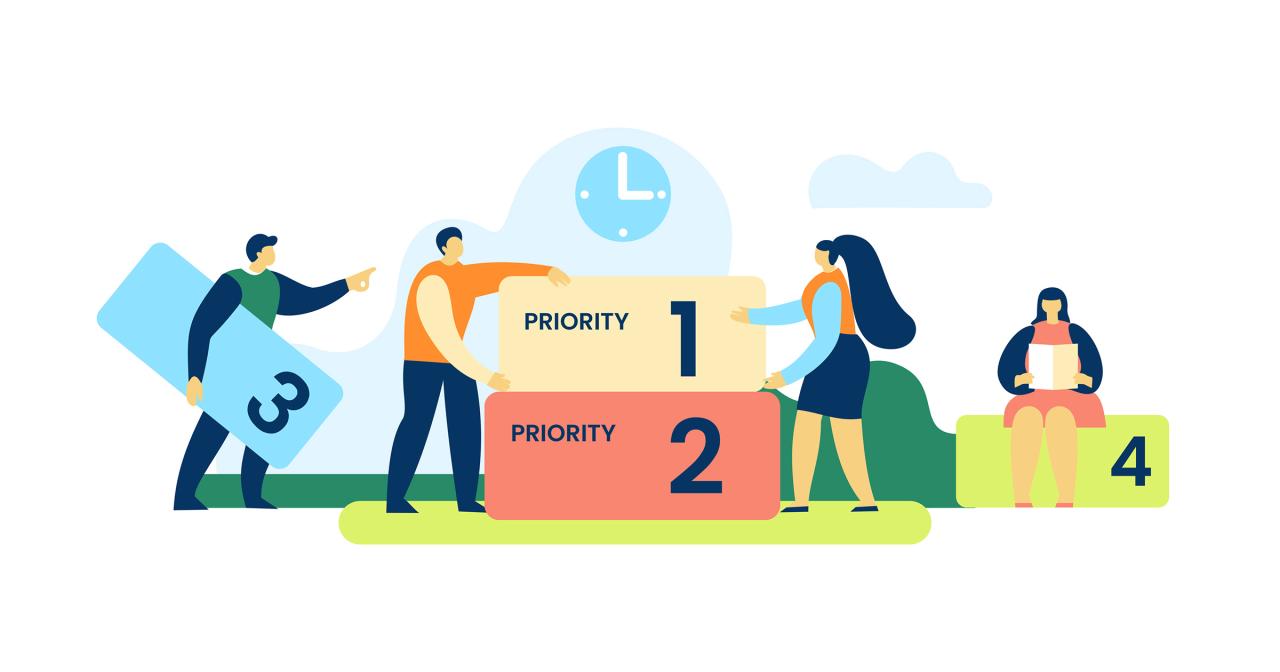
Effective task prioritization relies heavily on the right tools and resources. These tools act as extensions of your personal productivity system, helping you manage your tasks efficiently and strategically. Choosing the right tools can significantly improve your ability to accomplish your goals, whether they are personal or professional.A well-chosen tool can streamline your workflow, allowing you to focus on high-priority tasks and avoid getting bogged down by less important ones.
The key is finding a system that aligns with your personal work style and integrates seamlessly into your existing routines.
To-Do Lists and Task Management Apps
To-do lists, whether handwritten or digital, are fundamental tools for task prioritization. They provide a centralized repository for all your tasks, making it easier to visualize and manage your workload. Digital task management apps build upon this concept, offering enhanced features for organizing, scheduling, and tracking tasks. These applications often incorporate features for reminders, deadlines, and progress tracking, providing a comprehensive solution for managing your tasks.
Calendars and Scheduling Tools
Calendars and scheduling tools are indispensable for prioritizing tasks within a time-bound framework. They allow you to visualize your commitments and schedule time blocks for specific tasks, helping you to identify potential conflicts and allocate resources effectively. Integration with task management apps further enhances this process, enabling seamless transitions between planning and execution.
Popular Task Management Software
Numerous task management software options cater to various needs and preferences. Popular choices include Asana, Trello, Monday.com, Todoist, and ClickUp. Each platform offers unique features, ranging from project management capabilities to collaborative functionalities. The best choice often depends on the specific requirements of your projects and the preferences of your team.
Project Management Software for Prioritization
Project management software goes beyond simple task management. It offers robust features for project planning, resource allocation, and collaboration, allowing for a more strategic approach to task prioritization. Tools like Jira, Microsoft Project, and Wrike provide detailed dashboards and reporting capabilities, facilitating the monitoring of progress and adjustments to priorities as needed. This comprehensive approach ensures tasks are not only prioritized but also aligned with overall project objectives.
Comparison of Task Management Tools
| Tool | Features | Pros | Cons |
|---|---|---|---|
| Asana | Task assignment, project management, collaboration | User-friendly interface, versatile for various projects, good collaboration features | Can be complex for simple tasks, might not be the best for very large teams |
| Trello | Visual boards, Kanban system, flexible task organization | Highly visual, adaptable to different project types, simple to use | Limited reporting capabilities, less robust for complex projects |
| Monday.com | Customizable workflows, task management, project management | Highly customizable, versatile, good for both small and large teams | Steeper learning curve compared to some simpler tools |
| Todoist | Simple task management, focused on individual productivity | Intuitive, easy to use, great for personal use or small projects | Limited project management features, not ideal for large teams |
| ClickUp | Comprehensive task management, project management, collaboration | Highly versatile, robust features, good for various team sizes | Can be overwhelming for beginners, potentially complex interface |
Overcoming Challenges in Task Prioritization
Effective task prioritization is crucial for productivity and success, but it’s not always straightforward. Individuals often encounter obstacles that hinder their ability to effectively manage their tasks. Understanding these challenges and developing strategies to overcome them is key to achieving desired outcomes. This section will delve into common impediments and provide actionable techniques for navigating these hurdles.Effective prioritization isn’t just about assigning deadlines; it’s about understanding the interplay between tasks, deadlines, and individual capabilities.
By addressing procrastination, managing distractions, and adapting to shifting priorities, individuals can significantly improve their ability to complete tasks efficiently and effectively.
Procrastination and Time Management Issues
Procrastination is a common barrier to task completion. Understanding its root causes and implementing strategies to combat it is crucial for effective prioritization. Time management issues often stem from poor planning, unrealistic expectations, or an inability to effectively allocate time to various tasks. Addressing these issues requires a structured approach to time management and a proactive attitude towards planning.
- Recognizing Procrastination Triggers: Identifying the specific situations or emotions that trigger procrastination is a vital first step. Common triggers include fear of failure, perfectionism, feeling overwhelmed, or lack of motivation. Once identified, these triggers can be addressed individually to mitigate their impact on task completion.
- Developing Effective Time Management Strategies: Techniques like the Pomodoro Technique, time blocking, and the Eisenhower Matrix can significantly improve time management. These techniques help individuals allocate specific time slots for particular tasks, fostering focus and preventing time from being wasted on less important activities.
- Breaking Down Large Tasks: Large, complex tasks can feel overwhelming and lead to procrastination. Breaking down these tasks into smaller, more manageable subtasks can make them seem less daunting and more attainable, leading to greater motivation and productivity.
Managing Distractions and Interruptions
Distractions and interruptions are common culprits in hindering productivity. Developing strategies to minimize these disruptions is essential for effective task prioritization.
- Creating a Dedicated Workspace: Designate a specific area for work free from distractions, if possible. This dedicated space should be conducive to concentration and minimize distractions from personal matters or other potential interruptions.
- Utilizing Focus Techniques: Implementing techniques such as the “52/17 rule” or mindfulness exercises can help maintain focus and minimize the impact of distractions. These methods can significantly reduce the impact of interruptions and foster a more concentrated work environment.
- Communicating Boundaries: Communicating clear boundaries with colleagues or family members regarding work time can help minimize interruptions. Setting clear expectations about when to be available for specific tasks is essential for preventing unnecessary disruptions.
Prioritizing Tasks with Multiple Deadlines and Projects
Managing multiple deadlines and projects simultaneously is a common challenge. Developing a system for prioritizing tasks within these multifaceted contexts is vital for success.
- Utilizing Prioritization Matrices: Tools like the Eisenhower Matrix, the Urgent/Important Matrix, or similar prioritization matrices can help individuals systematically categorize tasks based on their urgency and importance, enabling efficient task management.
- Project Management Software: Employing project management software can help visualize tasks, deadlines, and dependencies, facilitating effective prioritization and task management across multiple projects.
- Setting Realistic Expectations: Setting realistic deadlines and expectations for each project is crucial to avoid feeling overwhelmed. Prioritizing tasks with careful consideration of individual capacities and project demands will contribute to effective time management.
Prioritize tasks based on their impact and urgency. Focus on high-impact tasks first, then address urgent tasks. Don’t get bogged down in less critical tasks, as they can often be delegated or scheduled for a later time.
Maintaining Prioritization Habits
Establishing and maintaining effective task prioritization habits is crucial for sustained productivity and achieving goals. Consistency in applying these techniques is key to long-term success. This involves not just understanding the initial steps but also building a system that adapts and evolves with your changing needs and circumstances.Effective prioritization isn’t a one-time action; it’s a continuous process requiring dedication and refinement.
The strategies Artikeld below help develop and maintain this crucial skill.
Strategies for Establishing and Maintaining Effective Habits
Developing and maintaining effective prioritization habits requires a multifaceted approach. This involves creating a system that aligns with your personal preferences and workflow, and regularly evaluating its effectiveness. Consistency and self-discipline are paramount. For example, establishing a daily routine for reviewing and adjusting priorities can significantly improve consistency. Implementing strategies for managing distractions and time effectively will also contribute to the success of your prioritization habits.
Importance of Regular Review and Adjustment of Priorities
Regularly reviewing and adjusting priorities is essential for maintaining effective task management. Priorities can shift due to unforeseen circumstances, emerging deadlines, or changing project requirements. Failure to adapt to these changes can lead to missed deadlines and decreased efficiency. For instance, a sudden illness or a critical project update could require an immediate shift in focus, highlighting the importance of ongoing evaluation.
Adapting Prioritization Strategies to Changing Circumstances
Adaptability is key to maintaining effective prioritization. Life is dynamic, and circumstances change frequently. A robust prioritization strategy must accommodate these changes. One should be prepared to re-evaluate priorities on a regular basis, perhaps daily or weekly, depending on the complexity of the tasks and projects at hand. This proactive approach ensures that resources and time are allocated optimally to meet current demands.
For example, an urgent client request may require re-prioritizing existing tasks to ensure timely delivery.
Examples of Successful Long-Term Prioritization Strategies
Successful long-term prioritization strategies often incorporate a combination of techniques. One effective approach is using a Kanban board to visualize workflow and task dependencies. This visual representation helps in identifying bottlenecks and adjusting priorities based on real-time progress. Another strategy involves establishing clear deadlines and utilizing time management tools like calendars or project management software. These tools aid in tracking progress and proactively adjusting priorities as needed.
Key Takeaways from Maintaining Task Prioritization
- Consistency is paramount for establishing and maintaining effective prioritization habits.
- Regular review and adjustment of priorities are crucial for maintaining alignment with changing circumstances.
- Adaptability to changing circumstances is essential for long-term success in task prioritization.
- Utilizing tools like Kanban boards and time management software can aid in maintaining effective prioritization.
- A combination of techniques and strategies, tailored to individual needs, is key to creating a sustainable prioritization system.
Illustrative Scenarios
Effective task prioritization is a crucial skill for individuals and teams alike. It allows for focused effort, optimized resource allocation, and ultimately, the achievement of goals. Understanding various scenarios, from personal struggles to high-pressure team environments, provides valuable insights into the application of prioritization strategies.
A Scenario of Struggling with Task Prioritization
Amelia, a project manager, frequently finds herself overwhelmed by competing deadlines and tasks. She struggles to differentiate between urgent and important tasks, often succumbing to the pressure of immediate demands. This results in missed deadlines, increased stress, and a general feeling of being constantly behind schedule. Her lack of a structured prioritization method leads to a constant state of reactive management, rather than proactive planning.
She jumps between tasks, often feeling like she’s spinning her wheels without making significant progress. This cycle reinforces a sense of inadequacy and disrupts her overall work-life balance.
A Scenario of Successful Task Prioritization
David, a software developer, utilizes a combination of the Eisenhower Matrix and the Pareto Principle to manage his workload effectively. He meticulously assesses each task, categorizing it as urgent/important, important/not urgent, urgent/not important, or not urgent/not important. This structured approach helps him focus on high-impact tasks first, ensuring key deliverables are completed on time. By consistently applying this method, David consistently meets deadlines, maintains a healthy work-life balance, and enjoys higher job satisfaction.
His proactive approach allows him to anticipate potential issues and adjust his schedule accordingly.
Prioritizing Tasks in a Team Environment
Team prioritization necessitates a collaborative approach. Effective team prioritization begins with clear communication of goals and individual roles. A team should establish a shared understanding of project objectives and individual responsibilities. Utilizing tools like shared project management platforms, with clear task assignments and deadlines, promotes accountability and transparency. Regular team meetings, dedicated to reviewing progress and adjusting priorities, are vital for maintaining alignment and addressing any emerging issues.
Prioritizing Tasks in a High-Pressure Situation
During a critical project deadline, a team experiences a surge in unexpected issues. Employing a rapid prioritization strategy is crucial. The team leader should quickly assess the impact of each task on the overall project objective. By focusing on tasks directly affecting the project’s critical path, the team can allocate resources effectively to resolve the most impactful issues.
Prioritizing tasks based on their impact, urgency, and dependencies allows for efficient resource allocation in challenging conditions. Using a prioritized to-do list helps team members quickly focus on the most important items.
Visual Representation of a Prioritization Strategy
| Task | Description | Priority Level | Due Date | Assigned To |
|---|---|---|---|---|
| Develop User Interface | Design and implement the application’s front-end | High | October 26 | Sarah |
| Implement Core Logic | Develop the core functionality of the application | High | October 27 | David |
| Database Integration | Connect the application to the database | Medium | October 28 | Emily |
| Testing and Quality Assurance | Verify the application’s functionality | High | October 29 | Team |
| Documentation | Create user manuals and technical documentation | Low | October 30 | Team |
This table visually represents a prioritization strategy applied to a project. Tasks are categorized by priority level (High, Medium, Low), due date, and assigned team member. This visual representation helps the team understand the project’s critical path and manage resources efficiently.
Wrap-Up
In conclusion, mastering task prioritization is a journey of continuous learning and adaptation. By understanding the principles, applying various techniques, and utilizing effective tools, individuals and teams can significantly enhance their productivity and achieve greater success. The key is to tailor your approach to individual needs and circumstances, and to regularly evaluate and refine your strategies for optimal results.