Effective revision is a crucial step in the writing process, transforming raw ideas into polished, compelling pieces. This guide delves into the intricacies of revision, offering a structured approach for refining your writing across various genres, from academic papers to creative works. Understanding the distinct stages of revision, from initial brainstorming to final polishing, is key to maximizing your writing potential.
This comprehensive guide provides a detailed framework for understanding and implementing effective revision strategies. We will explore the core principles of revision, including identifying areas needing improvement, employing specific techniques for enhancing clarity, and fine-tuning the overall structure and style of your work. We’ll also cover the use of various tools and resources, ensuring that you are equipped with the necessary knowledge and support for every stage of the revision process.
Understanding Effective Revision
Revision is a crucial stage in the writing process, often overlooked but essential for producing high-quality work. It goes beyond simply correcting errors; it’s a deliberate and iterative process of refining ideas, strengthening arguments, and enhancing clarity. Unlike editing, which focuses on grammar and mechanics, and proofreading, which checks for surface-level errors, revision delves into the deeper structural aspects of the writing.
This process is vital for all types of writing, from academic essays to creative fiction.Effective revision involves a conscious effort to improve the content, structure, and impact of the writing. It’s not simply about fixing mistakes, but about actively shaping the piece into its best possible form. Through revision, writers can strengthen their arguments, refine their ideas, and ultimately communicate their message more effectively.
This ongoing process allows writers to clarify their thinking and enhance the overall quality of their work.
Definition and Distinction from Editing and Proofreading
Revision fundamentally alters the content of a piece, improving its structure, argumentation, and clarity. It’s a process of restructuring, reorganizing, and adding/removing content to strengthen the overall piece. Editing, on the other hand, focuses on grammar, mechanics, and style, addressing issues such as sentence structure, punctuation, and word choice. Proofreading is the final stage, ensuring the absence of typographical errors, inconsistencies in formatting, and other minor errors.
A well-structured piece may need multiple rounds of revision, editing, and proofreading to reach its final form.
Key Purposes and Benefits of Revision
Revision serves several key purposes in the writing process. It allows writers to strengthen their arguments, ensuring they are logical, well-supported, and persuasive. It helps writers clarify their ideas, making their writing more concise and easier to understand. Revision also improves the flow and coherence of the writing, creating a more engaging and impactful reading experience. Ultimately, revision enhances the overall quality and effectiveness of the writing.
Stages of Revision
The revision process typically progresses through distinct stages, from initial brainstorming to final polishing. The initial brainstorming phase involves generating ideas, outlining arguments, and developing a basic structure. Next comes the drafting stage, where the writer translates their ideas into a written form. Following drafting is the first round of revision, focusing on the overall structure, argumentation, and flow.
Further revisions may be needed to address specific issues and refine the content. Finally, a polishing stage ensures the writing is free of errors, is well-structured, and effectively conveys the intended message.
Effective Revision Strategies
Effective revision strategies vary depending on the type of writing. For essays, writers might focus on strengthening their thesis statement, supporting arguments with evidence, and refining the flow of ideas. In reports, clarity and accuracy are paramount, with revision focusing on presenting data effectively and logically. Creative writing benefits from revision that strengthens character development, enhances plot, and refines descriptive language.
For example, in a creative piece, the pacing and dialogue might be revised to make the narrative more engaging. For any type of writing, actively seeking feedback from others is invaluable in identifying areas for improvement.
Comparison of Editing, Proofreading, and Revision
| Characteristic | Editing | Proofreading | Revision |
|---|---|---|---|
| Focus | Grammar, mechanics, style | Typos, formatting, inconsistencies | Content, structure, argumentation |
| Goal | Improve clarity and style | Ensure accuracy and consistency | Strengthen the overall piece |
| Stage in Writing Process | Usually after drafting | After editing | Throughout the writing process |
| Example Actions | Revising sentence structure, choosing precise words | Checking for spelling errors, ensuring consistent formatting | Rearranging paragraphs, adding supporting evidence |
Identifying Areas for Revision
Effective revision hinges on a keen eye for areas needing improvement. Beyond simply rereading, it demands a strategic approach that identifies weaknesses and leverages understanding of audience and purpose. This process allows for targeted adjustments, ultimately leading to a stronger, more impactful piece of writing.Identifying weaknesses in a piece of writing requires a critical evaluation process. This involves more than just proofreading for grammatical errors.
It necessitates a deliberate examination of the content, structure, and overall effectiveness of the writing. Techniques include rereading with a fresh perspective, seeking feedback from others, and employing self-reflection.
Techniques for Identifying Weaknesses
This involves an active and critical approach to the text, moving beyond surface-level issues. Recognizing and addressing weaknesses enhances the overall quality of the writing. These techniques include:
- Rereading with a critical eye: Attempt to read the text as if you were a reader unfamiliar with the author’s intent. Note sections that seem unclear, confusing, or underdeveloped. Pay attention to transitions between ideas and the overall flow of the writing.
- Seeking feedback from others: A fresh set of eyes can often identify weaknesses that the writer might have missed. Request feedback from peers, instructors, or mentors who can provide constructive criticism and suggest areas for improvement.
- Employing self-reflection: Ask yourself questions about the writing, such as “Does this paragraph effectively convey the intended message?” or “Is the structure logical and easy to follow?” Critical self-assessment is key to recognizing weaknesses.
Analyzing Audience and Purpose
Understanding the intended audience and the purpose of the writing is crucial for effective revision. Tailoring the language, tone, and examples to resonate with the audience ensures the message is well-received. This analysis guides revision choices, ensuring the writing is appropriate and effective.
- Audience consideration: Consider the knowledge level, interests, and expectations of the target audience. Adjust the writing style, vocabulary, and level of detail accordingly. For instance, technical jargon might be appropriate for an audience of experts but not for a general audience.
- Purpose clarification: Clarify the primary goal of the writing. Is it to inform, persuade, entertain, or analyze? This understanding guides the content and approach of the revision, ensuring alignment with the intended purpose.
Evaluating Clarity, Conciseness, and Coherence
Assessing the clarity, conciseness, and coherence of writing ensures the message is easily understood and logically presented. This involves considering how well the ideas flow and whether the writing is straightforward.
- Clarity: Is the meaning of the writing clear and easily understandable? Avoid ambiguous language and ensure all terms are defined adequately.
- Conciseness: Is the writing free of unnecessary words or phrases? Ensure that every word contributes to the message and that the writing is concise and direct.
- Coherence: Do the ideas flow logically from one to another? Check for logical connections between sentences and paragraphs, ensuring a seamless progression of thought.
Comparing Revision Methods
Different revision methods offer varying approaches to improving writing. The optimal choice depends on the specific needs of the piece.
| Revision Method | Description | Strengths | Weaknesses |
|---|---|---|---|
| Peer Review | Feedback from colleagues | External perspective, diverse viewpoints | Potential for bias, differing interpretations |
| Self-Reflection | Personal assessment | Deep understanding of own work, cost-effective | Potential for overlooking weaknesses, subjective judgment |
| Developmental Editing | Systematic evaluation | Detailed feedback, identified patterns | Time-consuming, may require professional editor |
Recognizing Inconsistencies in Tone, Style, and Voice
Maintaining a consistent tone, style, and voice throughout the writing is crucial for creating a cohesive and impactful piece. Inconsistencies can confuse the reader and weaken the overall effect.
- Tone: Ensure the tone remains appropriate for the audience and purpose. A formal tone should be maintained throughout the writing.
- Style: The writing style should be consistent. Avoid abrupt shifts in sentence structure or vocabulary. Maintaining a consistent level of formality is vital.
- Voice: The writing voice should be consistent and appropriate for the subject matter. Avoid shifting from a personal to a detached tone without justification.
Techniques for Revising Content
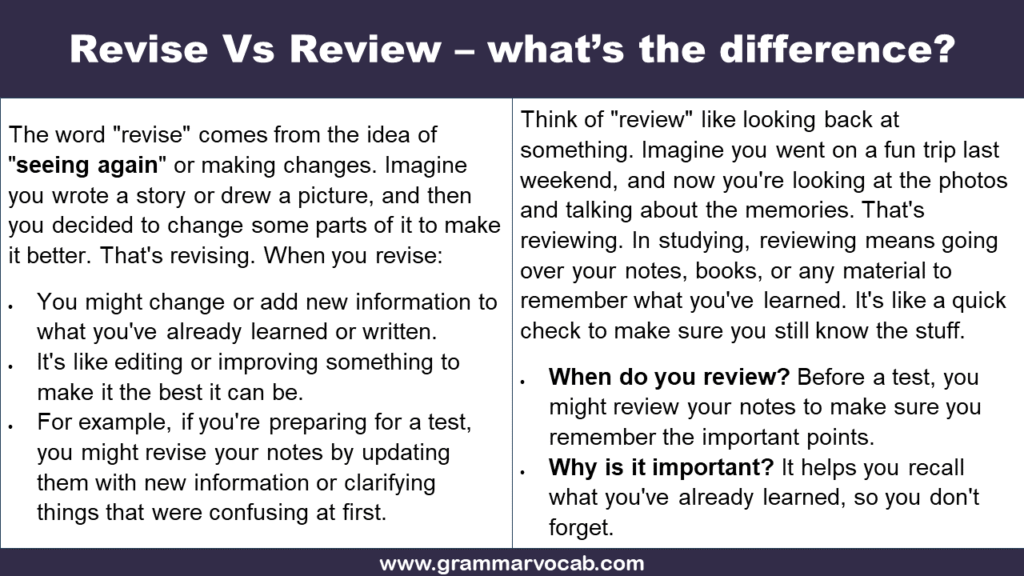
![Revise Vs Review: 9 Differences + Examples [2024] - Phoenix English](https://kenzo.web.id/wp-content/uploads/2025/09/Which-one-is-right-Revise-or-Review-Whats-the-main-answer.jpg "Revise Vs Review: 9 Differences + Examples [2024] - Phoenix English")
Effective revision transcends mere editing; it’s a multifaceted process demanding careful consideration of clarity, logic, engagement, and feedback. Revision is not just about fixing errors, but also about refining and enhancing the overall quality and impact of the content. This process necessitates a systematic approach to improve the piece’s effectiveness and ensure its intended message is communicated clearly and persuasively.
Improving Clarity and Conciseness
Achieving clarity and conciseness in revised content is crucial for reader comprehension. Redundant phrases, convoluted sentence structures, and ambiguous language hinder understanding. Revision requires a critical eye to identify and eliminate these obstacles. A key technique involves active reading, scrutinizing each sentence for its contribution to the overall message. Replacing lengthy, complex sentences with shorter, more direct ones can often significantly improve clarity.
Substituting vague language with precise terms and avoiding jargon when possible are also vital.
Strengthening Argumentation and Logic
A strong argument relies on sound logic and well-supported claims. Revising content necessitates a thorough examination of the argument’s structure. Ensure that each point logically follows from the previous one and that the evidence presented effectively supports the thesis statement. Logical fallacies, such as hasty generalizations or appeals to emotion, should be identified and addressed. This may involve reorganizing sections, adding supporting evidence, or clarifying connections between different parts of the argument.
Enhancing Engagement and Interest
Engagement and interest are paramount for effective communication. Content that is dull or uninspired will fail to captivate the reader. Revision should focus on crafting a more dynamic and engaging writing style. Varying sentence structure, incorporating vivid descriptions, and using compelling examples can significantly improve reader engagement. Employing rhetorical questions or thought-provoking statements can further stimulate reader interest and encourage active reflection.
Incorporating Feedback from Others
Constructive feedback from peers, mentors, or editors can significantly enhance the quality of revised content. Be receptive to different perspectives and suggestions. This involves carefully considering the feedback and determining its relevance and value. Seek clarification if necessary, and synthesize helpful suggestions into the revised content. Acknowledge areas needing further development, and consider the feedback as an opportunity for improvement.
The Role of Active Reading in Revising
Active reading is a fundamental aspect of effective revision. It involves more than just passively absorbing the text. Instead, actively engage with the content by critically evaluating its structure, clarity, and argumentation. Seek to identify areas where the text could be improved, noting potential issues with clarity, logic, or engagement. This meticulous process allows for a more nuanced understanding of the content, enabling informed revisions.
By actively engaging with the content, revisers can more effectively pinpoint areas for improvement and develop a revised version that is both well-structured and impactful.
Revising Structure and Organization
Effective revision extends beyond correcting grammatical errors and refining vocabulary. A strong piece of writing also requires a well-structured argument. Understanding and manipulating the structure of your work—the arrangement of paragraphs, sections, and the overall flow of ideas—can significantly enhance clarity and impact. This section will delve into strategies for restructuring your work for better coherence and a more compelling presentation of your ideas.Revising the structure of a piece of writing involves thoughtfully rearranging elements to improve the flow and logical progression of ideas.
This often necessitates reordering paragraphs, sections, or even entire parts of the document to achieve a more logical and engaging presentation. A well-organized structure not only helps the reader understand the content but also allows the writer to present their arguments in the most persuasive and impactful way possible.
Restructuring Paragraphs and Sections
A well-structured paragraph is essential for clear communication. Paragraphs should focus on a single main idea and develop it logically. To improve paragraph flow, consider transitioning between ideas smoothly. Transitional phrases and sentences act as bridges between paragraphs, showing the connection between thoughts and ensuring a cohesive argument. When restructuring, identify the core idea of each paragraph.
If a paragraph wanders, consider breaking it into smaller, more focused paragraphs. Similarly, if several paragraphs address a single idea, consolidate them into a more comprehensive and impactful paragraph.
Adjusting Introduction, Body, and Conclusion
The introduction, body, and conclusion work together to form a complete argument. The introduction should clearly state the main idea and provide a roadmap for the argument. Body paragraphs should develop supporting arguments and evidence logically, using appropriate organizational patterns. The conclusion should summarize the main points and leave a lasting impression. Adjustments to these sections should aim to improve the clarity, coherence, and persuasiveness of the entire argument.
For example, a poorly written introduction may leave the reader confused about the topic or the writer’s purpose. A stronger introduction clearly states the topic and the writer’s argument.
Organizational Patterns
Different organizational patterns can effectively present information. Understanding these patterns is crucial for crafting a logical and engaging piece.
- Chronological Order: This method arranges events in the order they occurred. It’s effective for narrating stories, explaining historical processes, or describing a sequence of steps.
- Cause-and-Effect: This pattern examines the causes of an event and its resulting effects. It’s valuable for analyzing complex issues or exploring the consequences of actions.
- Compare-and-Contrast: This pattern highlights similarities and differences between two or more subjects. It’s useful for evaluating alternatives or providing a comprehensive understanding of various perspectives.
Modifying Paragraph Structure
The effectiveness of a paragraph can be significantly improved by restructuring its elements. The following table demonstrates how to modify the structure of a paragraph to enhance clarity and flow.
| Original Paragraph Structure | Revised Paragraph Structure | Improvement |
|---|---|---|
| Paragraph discusses multiple unrelated points. | Paragraphs broken down into smaller, focused paragraphs, each dealing with a specific point. | Improved focus and clarity. |
| Paragraph contains a weak or absent thesis statement. | Paragraph begins with a clear thesis statement, followed by supporting evidence and analysis. | Improved coherence and direction. |
| Paragraph lacks transitions between ideas. | Paragraph incorporates transitional phrases and sentences to connect ideas and maintain flow. | Improved logical progression. |
Developing a Strong Thesis Statement
A strong thesis statement is crucial for effective writing. It presents the central argument of your work and guides the development of your ideas. The thesis statement should be clear, concise, and arguable. Ensure that all the body paragraphs support and develop the claims presented in the thesis statement.
Revising Language and Style

Refining language and style is crucial for effective communication. A well-crafted piece of writing not only conveys information clearly but also resonates with the reader. This stage of revision focuses on enhancing word choice, sentence structure, tone, and voice, ultimately leading to a more compelling and engaging piece. By addressing these elements, writers can ensure their message is delivered with precision and impact.
Improving Word Choice
Careful selection of words is essential for conveying meaning accurately and effectively. Choosing precise and impactful vocabulary enhances the clarity and depth of your writing. This involves considering synonyms, understanding the nuances of different words, and selecting the most appropriate term for the specific context.
- Consider synonyms: Exploring synonyms allows you to discover words that convey similar meanings but have different connotations. This can enrich your writing by adding subtle shades of meaning and avoiding monotony.
- Avoid jargon and technical terms: While necessary in specific contexts, excessive jargon can alienate or confuse readers who are unfamiliar with the terminology. Consider the audience and purpose when deciding whether to use technical terms.
- Select strong verbs and active voice: Using strong verbs and adopting the active voice improves the dynamism and clarity of your writing. Active voice sentences are typically more direct and impactful than passive voice sentences.
- Use concrete and specific language: Abstract language can be vague and less engaging. Using concrete and specific language creates vivid images in the reader’s mind, improving their understanding and interest in the material.
Enhancing Sentence Structure
Effective sentence structure is key to conveying information clearly and engagingly. Varied sentence lengths and structures prevent monotony and maintain reader interest. This involves using a range of sentence types, from simple to complex, to enhance the flow and impact of your writing.
- Vary sentence length: Alternating short and long sentences creates rhythm and keeps the reader engaged. Short sentences can emphasize key points, while longer sentences can provide detailed explanations.
- Use a range of sentence types: Varying sentence types, including declarative, interrogative, imperative, and exclamatory sentences, adds dynamism and interest to the writing.
- Avoid run-on sentences and fragments: Run-on sentences and fragments can confuse readers and detract from the clarity of your writing. Ensure that each sentence expresses a complete thought.
- Employ parallel structure: Using parallel structure in sentences improves clarity and creates a more harmonious flow. This involves using similar grammatical structures to express related ideas.
Adjusting Tone and Voice
The tone and voice of your writing significantly impact its effectiveness. A consistent and appropriate tone throughout the piece is crucial for maintaining reader engagement and achieving the desired effect. The voice reflects your personality and perspective, contributing to the overall impact of the message.
- Establish a consistent tone: Maintain a consistent tone that aligns with the purpose and audience. A formal tone is suitable for academic writing, while a conversational tone might be more appropriate for personal essays.
- Reflect your personality: Allow your unique voice to shine through while maintaining clarity and professionalism. This can help your writing stand out and connect with readers on a deeper level.
- Consider the audience: Adjust your tone and style to suit the specific audience you are addressing. A tone that resonates with your target audience is crucial for effective communication.
Avoiding Clichés and Complex Language
Overused phrases, or clichés, can diminish the impact of your writing. Avoid clichés to create a fresh and engaging style. Similarly, overly complex language can confuse or alienate readers. Striking a balance between clarity and sophistication is key.
- Identify and replace clichés: Be mindful of clichés and replace them with more original and impactful language. This will make your writing stand out from the crowd.
- Simplify complex language: If possible, simplify complex sentences and avoid overly technical terms. Focus on clear and concise language that resonates with your target audience.
Incorporating Sensory Details and Vivid Imagery
Sensory details and vivid imagery create a more immersive and engaging reading experience. This helps readers visualize the scene, experience the emotions, and connect with the writing on a deeper level. Using vivid descriptions creates a more powerful impact.
- Use descriptive language: Use descriptive language to bring your writing to life. This can include using metaphors, similes, and sensory details to paint a picture for the reader.
- Incorporate sensory details: Incorporate details that appeal to the five senses (sight, sound, smell, taste, touch). This can enhance the reader’s experience.
Tools and Resources for Revision

Effective revision hinges on utilizing appropriate tools and resources. These tools assist in identifying areas needing improvement, refining content, and enhancing overall clarity and impact. A well-structured system for tracking revisions further ensures a smooth and efficient process. This section explores various tools and strategies to optimize your revision workflow.
Revision Software and Online Tools
Revision is significantly aided by software designed for this purpose. These programs often offer features like spell check, grammar check, and style suggestions. Online tools, accessible from any device with an internet connection, provide similar functionality, sometimes with added benefits like collaborative editing. Examples include Grammarly, ProWritingAid, and Hemingway Editor. Grammarly, for instance, helps identify grammatical errors, provides style suggestions, and offers context-specific feedback.
ProWritingAid analyzes prose for readability and conciseness. Hemingway Editor simplifies complex sentences, enhancing readability.
Dictionaries, Thesauruses, and Style Guides
Dictionaries and thesauruses are indispensable tools for vocabulary refinement and sentence structure enhancement. A dictionary offers precise definitions and usage examples, while a thesaurus provides alternative word choices, enhancing the richness and sophistication of your writing. Style guides, like the Chicago Manual of Style or the MLA Handbook, provide guidelines for formatting, citation, and stylistic consistency. Consulting these resources ensures consistency and accuracy in your writing, aligning with established conventions.
Utilizing Feedback Effectively
Feedback from peers, mentors, or instructors is invaluable in the revision process. Actively seeking feedback and thoughtfully considering suggestions are critical. Understanding the rationale behind the feedback allows for informed revisions and improvements. For instance, if a reviewer suggests a more concise sentence structure, analyze the feedback and rephrase accordingly. Actively responding to the suggestions allows for a more focused and effective revision.
Creating a Revision Tracking System
Establishing a system for tracking revisions is crucial for maintaining an organized workflow. A dedicated document or spreadsheet can track revisions, noting specific changes, the rationale for changes, and the date of revisions. This detailed record allows you to easily revisit past edits and trace the evolution of your work. Using a version control system, such as Git, is also effective for collaborative projects.
Comparing Revision Tools
| Tool | Strengths | Weaknesses | Target Audience |
|---|---|---|---|
| Grammarly | Excellent grammar and style checking, extensive vocabulary suggestions. Integrates with various platforms. | Can be overly prescriptive in some cases. May not always understand nuanced writing styles. | Students, writers, professionals needing general writing improvement. |
| ProWritingAid | Comprehensive analysis of readability, sentence structure, and vocabulary. Offers detailed reports. | Subscription-based, potentially expensive for infrequent use. Analysis might not always be intuitive. | Writers and professionals seeking a more in-depth analysis of their writing. |
| Hemingway Editor | Focuses on readability and conciseness. Simple, straightforward interface. | Limited in its analysis compared to others. May not provide comprehensive grammar checks. | Writers aiming for clear, concise prose. |
Practicing Effective Revision
Effective revision is not a one-time event but an iterative process crucial for producing high-quality written work. It involves critically examining and refining your writing to ensure clarity, accuracy, and impact. This section delves into practical strategies for mastering the revision process, offering step-by-step guides and real-world examples. It also addresses common challenges, such as writer’s block, and provides tailored approaches for different academic paper types.Revision is a multifaceted process that goes beyond simple editing.
It necessitates a fresh perspective, a willingness to challenge assumptions, and a commitment to improvement. This iterative approach is essential for producing impactful and well-structured content.
Step-by-Step Revision Guide
A systematic approach to revision is essential for maximizing its effectiveness. This structured process fosters a more focused and productive revision experience. Following these steps can lead to a significantly improved final product.
- Initial Read-Through and Reflection: Begin by reading your work aloud or silently, focusing on the overall message and flow. Identify any immediate concerns, such as inconsistencies in tone or awkward phrasing. Note these areas for later attention. This initial step establishes a foundational understanding of the work’s strengths and weaknesses.
- Targeted Revision: Focus on specific aspects of your writing, such as clarity, organization, and support for claims. This step should involve revisiting the previously identified concerns, and actively address any issues you found during the initial read-through.
- Seeking Feedback: Sharing your work with peers, professors, or writing center tutors can provide valuable insights and perspectives. Consider their feedback thoughtfully and use it to refine your work further. This collaborative approach fosters a more comprehensive understanding of your writing.
- Final Review and Refinement: Once you have incorporated feedback and made revisions, take a final look at your work. Ensure that all elements align with your intended message and that the overall structure and flow are smooth and coherent. This final step solidifies the integrity and quality of the work.
Applying Revision Strategies
Applying revision strategies to real-world examples enhances comprehension and understanding. Consider the following example.
Original Paragraph: The study found significant correlation between exercise and health benefits. People who exercised regularly showed improved cardiovascular health, muscle strength, and overall well-being. The results were clear. The findings are very important.
Revised Paragraph: Research demonstrated a strong correlation between regular exercise and enhanced health outcomes. Participants who engaged in consistent physical activity experienced improvements in cardiovascular health, muscle strength, and overall well-being. These results underscore the importance of exercise for maintaining optimal health.
The revised paragraph is more concise and uses stronger vocabulary, enhancing the impact of the writing.
Overcoming Writer’s Block
Writer’s block during the revision process can be frustrating but can be overcome with strategic approaches. Taking breaks, engaging in a different activity, and brainstorming alternative perspectives are effective methods.
- Taking Breaks: Stepping away from your work for a short period can allow your mind to refresh and return with renewed focus.
- Engaging in a Different Activity: Engaging in an unrelated activity can help to clear your mind and facilitate creative thinking.
- Brainstorming Alternative Perspectives: Considering alternative viewpoints on your topic can help you identify areas for improvement and expand your understanding of the subject.
Revising Different Academic Paper Types
Applying revision strategies varies based on the specific paper type. Understanding the characteristics of each type allows for tailored revision approaches.
| Paper Type | Revision Focus |
|---|---|
| Research Paper | Accuracy of citations, validity of arguments, logical flow of ideas. |
| Argumentative Essay | Clarity of thesis statement, logical reasoning, strength of evidence. |
Importance of Setting Realistic Goals and Deadlines
Setting realistic goals and deadlines for revision helps maintain a focused and productive revision process. Breaking down the revision process into smaller, manageable tasks ensures that you are not overwhelmed by the scope of the project.
Revising for Different Purposes
Effective revision extends beyond the mechanics of grammar and style. It necessitates a deep understanding of the intended purpose and audience. Adapting revision strategies to match the specific writing goal ensures the final product resonates with its target audience and achieves its desired impact. This involves careful consideration of factors such as the target audience, the communication context, and the overarching objectives.Revising for diverse purposes, from academic papers to creative fiction, requires recognizing the unique demands of each genre.
This involves adjusting the language, tone, and structure to align with the specific expectations of the target audience and the purpose of the communication. For instance, an academic paper demands a formal tone and a rigorous approach to evidence, while a persuasive speech might employ more emotive language and a structured argument. Understanding these nuances is key to crafting impactful and effective revisions.
Adapting Revision Strategies for Different Writing Purposes
Different writing purposes necessitate different revision approaches. Academic writing, for instance, demands a high level of precision, evidence-based arguments, and adherence to specific formatting guidelines. Professional writing requires clarity, conciseness, and a professional tone. Creative writing, on the other hand, prioritizes originality, emotional impact, and evocative language. Tailoring the revision process to these distinct purposes ensures the final product aligns with the intended outcome.
Revising for Specific Audiences
Revision must also consider the intended audience. A document intended for experts in a particular field will differ significantly from one aimed at a general audience. For example, an academic paper targeting experts in astrophysics might utilize highly specialized terminology, whereas a presentation for a general audience would require simpler language and more illustrative examples. Adapting the language and tone to the target audience ensures that the message is effectively conveyed and understood.
Tailoring Language and Tone
The language and tone employed in the revision process directly reflect the purpose and audience. Formal writing often utilizes sophisticated vocabulary and avoids colloquialisms, while informal writing might incorporate humor and personal anecdotes. Consideration should be given to the overall message and how it interacts with the audience’s knowledge level and expectations. In persuasive speeches, strong language, clear calls to action, and emotionally resonant narratives are often employed.
Evaluating Revision Effectiveness
Evaluating the effectiveness of the revision process depends heavily on the specific writing purpose. For an academic paper, this might involve checking for the soundness of arguments, the validity of evidence, and the adherence to academic standards. For a creative story, effectiveness might be judged based on the emotional impact, the engagement of the reader, and the overall storytelling.
A persuasive speech’s effectiveness is measured by its ability to persuade the audience and motivate action.
Revising a Persuasive Speech
A persuasive speech requires a meticulous revision process that focuses on the delivery, emotional impact, and the strength of the argument. Revision should include:
- Strengthening the Argument: Carefully analyze the structure of the argument, ensuring each point logically flows to the next and supports the overall thesis. Consider using evidence, statistics, and compelling examples to bolster the claims made.
- Crafting a Compelling Introduction and Conclusion: The introduction should grab the audience’s attention and clearly state the purpose of the speech. The conclusion should summarize the key points and leave a lasting impression.
- Refining Language and Tone: Use strong verbs, evocative language, and emotionally resonant phrasing. Ensure the language resonates with the audience and conveys the desired message.
- Ensuring Clarity and Conciseness: Avoid jargon or overly complex language. Ensure that the message is clear, concise, and easy to understand.
- Testing the Delivery: Practice the speech out loud, paying attention to pacing, tone, and body language. Revise the speech to enhance the impact of delivery.
Last Recap
In conclusion, mastering the art of revision is not merely about correcting errors; it’s about crafting a piece that resonates with its intended audience. This guide has provided a roadmap for understanding the various stages of revision, from identifying areas needing improvement to employing specific techniques for enhancement. By understanding the importance of revision and applying the techniques presented, you can transform your writing from a draft to a polished and impactful final product.