Effective delegation is a cornerstone of successful teamwork. It empowers individuals, frees up valuable time for managers, and ultimately contributes to higher productivity and project completion. This guide provides a structured approach to understanding, planning, and executing task delegation, ensuring optimal results within diverse team environments.
From defining clear expectations to providing ongoing support and measuring outcomes, this comprehensive guide equips you with the essential skills to delegate tasks effectively. It explores the benefits of delegation, considerations for team member strengths and weaknesses, and the importance of clear communication. We also address common challenges and discuss adaptable strategies for different team structures, including remote and in-person settings.
Understanding Delegation

Delegation is a crucial management skill that empowers individuals and teams. Effective delegation fosters a collaborative work environment, distributes workload efficiently, and allows managers to focus on higher-level tasks. It’s a dynamic process requiring careful consideration of individual strengths, task complexity, and team dynamics.Delegation involves assigning specific tasks or responsibilities to other team members, empowering them to complete the work while maintaining accountability.
This approach is beneficial for both the delegator and the delegatee. It allows managers to maximize their team’s potential and improve overall productivity.
Definition of Task Delegation
Task delegation is the act of assigning specific tasks or responsibilities to another individual or team member. This transfer of authority and responsibility is accompanied by clear expectations and guidelines, ensuring the task is completed to a predetermined standard. This process empowers team members, promoting growth and development.
Benefits of Delegating Tasks
Delegation offers numerous benefits. It frees up managers’ time to focus on strategic initiatives and high-level decision-making. It also develops team members’ skills and knowledge, allowing them to take on greater responsibility. This empowers team members and builds confidence, fostering a more engaged and motivated workforce. Further, delegation promotes a sense of ownership and accountability within the team, ultimately leading to improved performance.
Importance of Understanding Team Member Strengths and Weaknesses
Understanding individual team member strengths and weaknesses is critical to successful delegation. Matching tasks to individuals’ capabilities ensures optimal performance and prevents frustration. By considering their expertise and potential, managers can allocate tasks that will lead to successful outcomes. This careful assessment fosters a more efficient and productive work environment.
Identifying Suitable Tasks for Delegation
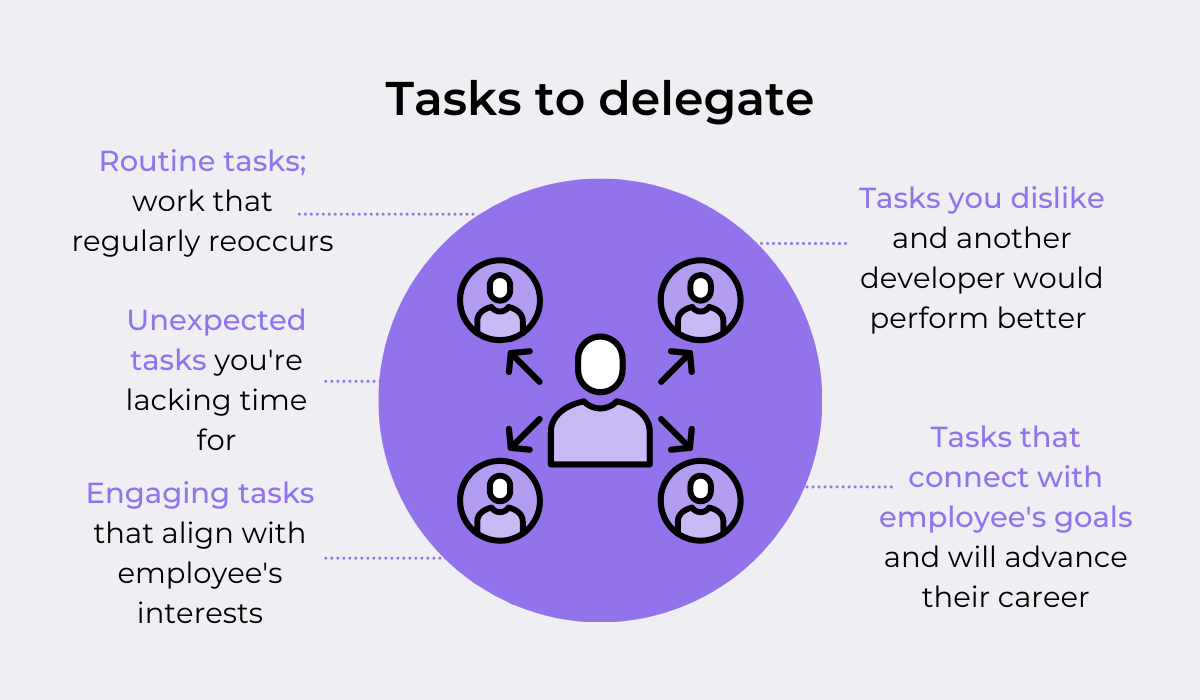
Identifying tasks suitable for delegation involves evaluating the task’s complexity and the delegatee’s capabilities. Tasks that are routine, repetitive, or require specific skills can often be delegated effectively. A clear understanding of the task’s scope and deliverables is essential for successful delegation. Tasks that can be broken down into smaller, manageable components are ideal for delegation.
Examples of Delegatable Tasks
Examples of tasks suitable for delegation include scheduling meetings, preparing reports, conducting research, creating presentations, and handling routine customer inquiries. These tasks are often well-defined, requiring specific skills and resources that can be effectively transferred to a team member.
Delegation Task Comparison
| Delegable Task | Non-Delegable Task | Reason |
|---|---|---|
| Scheduling meetings | Making critical decisions | Scheduling is routine, decisions require judgment |
| Data entry | Strategic planning | Data entry is repetitive, strategic planning requires high-level thinking |
| Creating presentations based on existing data | Developing the strategic vision for the company | Presentation creation can be delegated, strategic vision requires unique insight and experience |
| Preparing reports on specific metrics | Finalizing the budget for the next fiscal year | Report preparation is data-driven, budget finalization involves complex calculations and considerations |
Planning and Assigning Tasks

Effective delegation hinges on meticulous planning and clear assignment of tasks. This crucial step ensures that team members understand their responsibilities, deadlines, and expectations, leading to successful project completion. A well-structured approach fosters accountability and streamlines workflow.
Planning Tasks for Delegation
Planning delegated tasks involves a structured approach to ensure clarity and avoid ambiguity. This process should include identifying the specific tasks, breaking them down into smaller, manageable components, and considering the resources required for each component. Careful consideration of each stage prevents bottlenecks and ensures timely completion.
Defining Tasks and Responsibilities
Clearly defining tasks and responsibilities is paramount for successful delegation. Ambiguity in task descriptions can lead to misunderstandings, wasted effort, and ultimately, project failure. Explicitly outlining the scope, deliverables, and expected outcomes is critical for ensuring everyone is on the same page. Thorough documentation of these details prevents potential conflicts and promotes a shared understanding of the task at hand.
For example, instead of simply saying “complete report,” a clear definition might read “prepare a comprehensive report analyzing quarterly sales data, including charts and recommendations for improvement, due by October 26th.”
Communicating Task Expectations
Effective communication of task expectations is key to successful delegation. This involves not only providing a detailed description of the task but also clarifying any specific requirements, constraints, or desired outcomes. Regular communication throughout the delegation process can address potential issues proactively and ensure the team member understands their role fully. Examples include holding brief meetings to discuss task specifics, providing detailed written instructions, or utilizing project management tools to track progress and provide feedback.
Assigning Tasks to Team Members
Assigning tasks requires careful consideration of each team member’s strengths and workload. Matching the appropriate individual to the appropriate task optimizes efficiency and ensures timely completion. Prioritizing tasks and considering the current workload of each team member ensures a balanced distribution of responsibilities. Consider the individual’s skills and experience, as well as their current commitments, when assigning tasks.
Delegation Plan Steps
A well-defined process streamlines the delegation process, preventing misunderstandings and ensuring accountability. The following table Artikels the key steps in a delegation plan.
| Step | Action | Description |
|---|---|---|
| 1 | Identify task | Select a task for delegation. |
| 2 | Break down task | Divide the task into smaller, manageable sub-tasks. |
| 3 | Define responsibilities | Clearly Artikel the specific responsibilities for each sub-task. |
| 4 | Select delegate | Choose the most appropriate team member for each sub-task. |
| 5 | Set deadlines | Establish realistic deadlines for each sub-task and the overall task. |
| 6 | Communicate expectations | Clearly communicate task expectations, including resources, guidelines, and deliverables. |
| 7 | Monitor progress | Regularly monitor progress and provide support as needed. |
Setting Deadlines and Expectations
Establishing clear deadlines and expectations is crucial for managing delegated tasks effectively. Realistic deadlines prevent undue stress and ensure timely completion. These deadlines should be agreed upon with the delegate, considering their current workload and available resources. Communicating the importance of meeting deadlines, while providing support and flexibility when necessary, fosters a collaborative environment that emphasizes accountability.
Providing regular feedback and monitoring progress allows for adjustments and helps maintain the momentum of the project.
Providing Support and Feedback
Delegation is not a one-time act; it’s an ongoing process. Providing consistent support and constructive feedback is crucial for ensuring delegated tasks are completed successfully and for fostering a productive work environment. Effective support empowers team members, allowing them to perform their best and achieve the desired outcomes.Effective delegation involves more than just assigning tasks; it requires a commitment to supporting team members throughout the process.
This support encompasses providing necessary resources, monitoring progress, offering constructive feedback, and addressing any roadblocks encountered. This proactive approach helps ensure that delegated tasks are completed efficiently and effectively, contributing to overall team success.
Importance of Ongoing Support
Ongoing support is vital for maintaining team morale and ensuring high-quality work. When team members feel supported, they are more likely to take ownership of their tasks, stay motivated, and seek help when needed. This sense of support fosters a collaborative environment where team members feel empowered to contribute their best work.
Methods for Monitoring Progress
Regular check-ins are essential to monitor progress and identify potential issues early. These check-ins can be brief, focusing on key milestones or more detailed, depending on the complexity of the task. Regular communication channels, such as email, instant messaging, or scheduled meetings, can be used for these check-ins. Using project management tools can also provide a clear view of task completion and progress.
The use of visual aids, such as Gantt charts or Kanban boards, can help track progress and identify potential delays.
Providing Constructive Feedback
Feedback should be timely, specific, and focused on improvement. Avoid vague statements and instead offer concrete examples. Constructive criticism should be framed positively, highlighting strengths and areas for development. Focus on the task itself rather than the person. For example, instead of saying “Your report was poorly organized,” suggest “The report could be improved by using a clearer structure and visual aids.” Positive feedback should also be given to reinforce positive behaviors.
Addressing Potential Challenges or Roadblocks
Delegated tasks may encounter unexpected challenges or roadblocks. Addressing these issues promptly is vital to prevent delays and ensure successful completion. Proactive communication and problem-solving skills are essential for overcoming these hurdles. The delegation process should involve anticipating potential issues and planning contingency strategies. By being prepared for challenges, you can effectively guide team members toward solutions.
Examples of Effective Support Strategies
Providing access to necessary resources, such as relevant documents, software, or training materials, is crucial. Offering clear guidelines and expectations ensures that team members understand their roles and responsibilities. This includes providing access to the appropriate documentation and support materials. Offering training and development opportunities can enhance team members’ skills and improve task completion. For instance, if a team member is assigned a task requiring specific software, providing training materials or access to online tutorials will empower them to complete the task effectively.
Feedback Template
| Date | Task | Feedback | Next Steps |
|---|---|---|---|
| October 26, 2023 | Project X Report | Well-organized report, clear data presentation. | Continue this quality. |
| October 27, 2023 | Presentation Slides | Excellent use of visuals, compelling narrative. | Maintain this approach for future presentations. |
| October 30, 2023 | Client Meeting Prep | Thorough preparation, clear understanding of client needs. | Maintain this level of preparation. |
Measuring and Evaluating Results

Effective delegation hinges on the ability to accurately measure and evaluate the results of assigned tasks. This process allows for continuous improvement in delegation strategies and ensures that the assigned tasks are completed efficiently and effectively. By establishing clear metrics and providing consistent feedback, managers can foster a more productive and successful work environment.
Methods for Measuring Delegation Effectiveness
A comprehensive approach to measuring the effectiveness of delegation involves a multifaceted evaluation process. This includes considering the timeliness of task completion, the quality of the output, and the overall satisfaction of both the delegator and the delegatee. Quantifiable metrics are crucial for tracking progress and identifying areas for improvement.
Evaluating Performance of Delegated Tasks
Several methods can be employed to evaluate the performance of delegated tasks. These include performance reviews, regular progress reports, and feedback sessions. By implementing these methods, managers can identify areas where the delegation process needs adjustment and ensure that the tasks are completed according to the established standards. A structured approach helps identify potential bottlenecks or challenges early on.
Metrics for Tracking Progress and Outcomes
Establishing relevant metrics is essential for monitoring progress and outcomes. Key metrics might include the time taken to complete a task, the quality of the deliverables, the level of accuracy, and the overall satisfaction with the outcome. Examples include:
- Time-to-completion: Tracking the duration of each task provides insight into the efficiency of the delegation process. By monitoring the time it takes to complete tasks, managers can identify potential delays and adjust their strategies accordingly. For instance, if a task consistently takes longer than expected, it might indicate the need for clearer instructions or additional resources.
- Quality of deliverables: Evaluating the quality of the completed tasks is critical for ensuring the desired standards are met. This can be assessed through various methods, such as checklists, peer reviews, or external audits. For example, if the quality of deliverables consistently falls short of expectations, the delegation process or the delegatee’s skills may need refinement.
- Accuracy of results: Measuring the accuracy of the results is essential for tasks that demand precision. This can be measured by comparing the outcome to predetermined standards or benchmarks. For instance, in a data entry task, the number of errors can be a crucial metric for assessing accuracy.
- Employee satisfaction: The satisfaction of the delegatee regarding the delegation process is vital for long-term success. Regular feedback from the delegatee can offer insights into their experience and understanding of the tasks, which can be valuable for future delegation strategies. Surveys and feedback sessions can help identify areas for improvement.
Incorporating Feedback into Future Delegation Strategies
Regular feedback from both the delegator and the delegatee is crucial for refining delegation strategies. This feedback should encompass areas such as the clarity of instructions, the provision of adequate resources, and the support offered throughout the task completion process. A consistent feedback loop ensures the delegation process is continually optimized. Using a structured feedback mechanism can streamline the process and provide a more organized approach to identifying and addressing any issues.
Using Data to Improve Delegation Processes
Data analysis plays a vital role in identifying trends and patterns in delegation effectiveness. Analyzing metrics like time-to-completion, quality of deliverables, and employee satisfaction can highlight areas needing improvement. For instance, if a particular delegatee consistently demonstrates difficulty with a specific type of task, it might indicate the need for additional training or a different delegation approach. By leveraging data insights, managers can proactively address challenges and enhance the overall efficiency of the delegation process.
For example, if a team consistently misses deadlines, the data can help pinpoint the underlying causes, such as inadequate resources, unclear instructions, or lack of support.
Handling Challenges and Conflicts
Delegation, while a powerful management tool, can sometimes encounter unforeseen challenges. Understanding potential issues and developing strategies for addressing conflicts is crucial for successful task completion and maintaining positive team dynamics. Effective communication and proactive problem-solving are key to navigating these situations and ensuring team members feel supported and empowered.
Potential Issues and Challenges
Delegation, while empowering, can sometimes lead to misunderstandings, differing opinions, or even outright conflicts. Potential challenges include varying levels of skill and experience among team members, conflicting priorities, unclear task definitions, and differences in work styles. Furthermore, inadequate communication, a lack of trust, or a poor understanding of delegation protocols can all contribute to difficulties. Misaligned expectations and a lack of clarity regarding timelines and deliverables can also lead to conflict.
Strategies for Addressing Conflicts and Disagreements
Addressing conflicts constructively requires a proactive approach. Open communication, active listening, and a focus on finding common ground are essential. Establishing clear communication channels and protocols from the outset is crucial to prevent misunderstandings and foster a collaborative environment. Encouraging team members to express concerns and actively seeking solutions are vital components of effective conflict resolution. Maintaining a respectful and professional tone is critical to navigating these situations constructively.
Handling Conflicts Related to Delegated Tasks
Conflicts can arise from differing interpretations of task requirements, differing opinions on the best approach, or disagreements about timelines. For example, a team member might feel a delegated task is too complex or beyond their skill level, leading to frustration and resistance. Alternatively, a team member might disagree with the assigned timeline, citing conflicting priorities. In such situations, a manager should actively listen to the concerns, seek to understand the root cause of the conflict, and facilitate a solution that satisfies all parties.
A structured approach that prioritizes active listening, open dialogue, and collaborative problem-solving can be instrumental in resolving conflicts constructively.
Importance of Clear Communication Channels
Clear communication channels are vital for effective delegation and conflict resolution. Establishing a system for feedback, updates, and reporting ensures transparency and accountability. Regular check-ins, clear expectations, and readily available communication channels, such as email, instant messaging, or project management software, promote effective communication. Open and honest communication is essential for resolving any issues quickly and efficiently.
This also fosters trust and a collaborative environment.
Addressing Team Members Struggling with Delegated Tasks
Team members may struggle with delegated tasks due to various factors, including lack of clarity, insufficient resources, or a lack of confidence. A manager should first identify the specific reasons for the struggle. This could involve assessing the complexity of the task, identifying potential skill gaps, or understanding any external factors that may be affecting the team member’s performance.
Offering support, guidance, and resources can help the team member overcome the challenges. Providing additional training, mentoring, or breaking down complex tasks into smaller, more manageable steps can prove beneficial. Regular check-ins and constructive feedback can help the team member stay on track. Important note: Recognizing and addressing underlying issues, such as a lack of confidence or a mismatch between the task and the team member’s skills, is critical.
Delegation in Different Environments
Delegation is a crucial management skill, but its application varies significantly depending on the team structure and work environment. Understanding these nuances allows managers to tailor their delegation strategies for optimal effectiveness and productivity. This section delves into how to adapt delegation techniques for different types of teams, from remote to project-based, and explores successful strategies across various cultures and team structures.Adapting delegation strategies for diverse teams requires careful consideration of communication styles, feedback preferences, and cultural norms.
Recognizing these factors is essential for creating a supportive and productive environment where team members feel empowered and valued.
Comparing Task Delegation in Different Work Environments
Different team structures necessitate adjustments in delegation strategies. Remote teams, in-person teams, and project-based teams each present unique challenges and opportunities. Understanding these distinctions allows managers to tailor their approach to ensure effective task assignment and successful completion.
| Team Type | Communication Style | Feedback Approach | Considerations |
|---|---|---|---|
| Remote Team | Frequent check-ins, written communication (emails, project management tools), video conferencing | Detailed written feedback, video conferencing, regular check-ins | Establish clear communication channels, ensure access to necessary resources, and build trust through consistent communication. Regular virtual meetings, shared documents, and project management tools are vital. |
| In-Person Team | Face-to-face discussions, impromptu meetings, collaborative workspaces | Direct feedback during meetings, one-on-one conversations, observations | Leverage the opportunity for immediate feedback and clarification. Encourage team members to collaborate openly and ask questions in person. |
| Project-Based Team | Project-specific communication channels, frequent team meetings, task-oriented discussions | Project-specific feedback, progress reports, team meetings | Clearly defined project goals, milestones, and deadlines. Focus on collaboration and shared accountability within the project framework. |
Adapting Delegation Strategies for Diverse Team Structures and Cultures
Effective delegation requires an understanding of individual and cultural preferences. Managers should adapt their approach to ensure the chosen strategy aligns with the team’s working style and cultural context.
- Cultural Sensitivity: Consider cultural norms regarding communication styles, feedback preferences, and directness. For example, some cultures value direct feedback while others prefer a more indirect approach. Managers must adapt their communication to respect cultural differences.
- Individual Preferences: Acknowledge that team members have different learning styles, communication preferences, and preferred work environments. Tailoring the delegation process to these individual preferences can significantly impact the outcome.
- Team Dynamics: Pay attention to the dynamics within the team. Some teams may require more structure and direction, while others might function better with greater autonomy. Understanding the specific team dynamics allows for a more tailored delegation approach.
Examples of Successful Delegation Strategies in Different Environments
Effective delegation strategies involve clear communication, consistent feedback, and a willingness to adapt to the specific needs of the team and project.
- Remote Team Example: A project manager utilizes a dedicated project management tool to assign tasks, track progress, and provide regular updates to team members. Video conferencing sessions are scheduled for progress reviews and feedback sessions.
- In-Person Team Example: A team leader organizes a brainstorming session to collaboratively define tasks and responsibilities, then provides detailed instructions and sets clear deadlines. Regular check-ins and feedback are facilitated through face-to-face meetings.
- Project-Based Team Example: A project manager uses a dedicated project timeline and assigns specific roles to team members based on their skills and experience. Progress reports and regular meetings are used to provide and receive feedback.
Strategies for Effective Delegation Across Virtual and In-Person Teams
Effective delegation transcends the physical environment. Managers need to adopt strategies that promote clarity and collaboration, regardless of team location.
- Establish Clear Expectations: Clearly define the task, its objectives, deliverables, and deadlines for both virtual and in-person teams. This ensures everyone is on the same page.
- Provide Necessary Resources: Ensure team members have access to the necessary tools, information, and support to complete their assigned tasks effectively, regardless of their location.
- Foster Open Communication: Promote open communication channels to facilitate regular check-ins, feedback, and problem-solving, whether through video conferencing or in-person meetings.
Final Summary
In conclusion, successful delegation hinges on understanding your team, clearly defining tasks, providing ongoing support, and measuring results. This process not only boosts efficiency but also fosters a more collaborative and engaged work environment. By applying the strategies Artikeld in this guide, you can significantly enhance your team’s performance and achieve project objectives with greater ease and satisfaction.